Human in the Loop: What It Means for AI Agents
Human in the loop means a person reviews or approves an AI decision. Learn the three oversight models and how to pick the right one for each agent action.

Contents · 12 sections
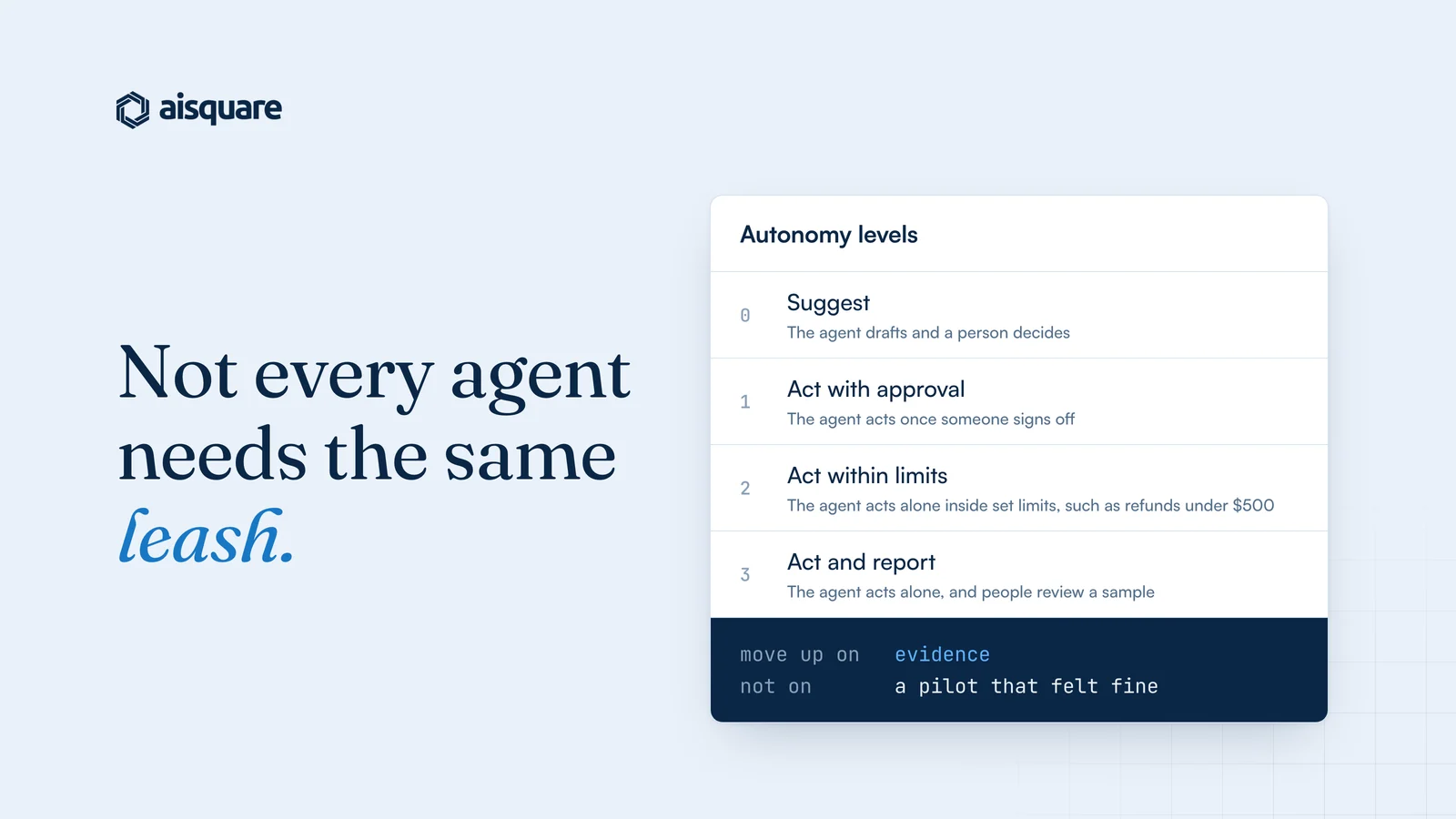
- The three oversight models
- Why “a human reviews everything” fails
- What a reviewer needs to see
- How to decide which actions need a human
- Autonomy should be earned
- What regulators expect
- Where AISquare fits
- FAQ
- What does human in the loop mean in AI?
- What is the difference between human in the loop and human on the loop?
- Do AI agents always need a human in the loop?
- Next step
Human in the loop (HITL) means a person reviews, approves or corrects an AI system’s decision before it takes effect. It is a common safeguard for AI in high-stakes work. With AI agents, the hard part is choosing which decisions get a human, because reviewing all of them removes the point of having an agent.
The three oversight models
| Model | What the human does | Best for |
|---|---|---|
| Human in the loop | Approves each decision before it happens | High-risk or irreversible actions |
| Human on the loop | Watches decisions as they happen and can step in | Medium-risk actions at volume |
| Human out of the loop, with after-the-fact review | Reviews results afterward, in samples or reports | Low-risk, reversible, well-tested actions |
Most companies need all three at once, applied to different actions by the same agent.
Why “a human reviews everything” fails
Putting a person in front of every agent decision sounds safe. In practice it breaks down in three ways.
- It does not scale. An agent that handles 10,000 conversations a day creates 10,000 reviews. The savings disappear.
- Reviewers stop reading. When 99 of 100 decisions are fine, people approve the hundredth without looking. This is often called automation bias.
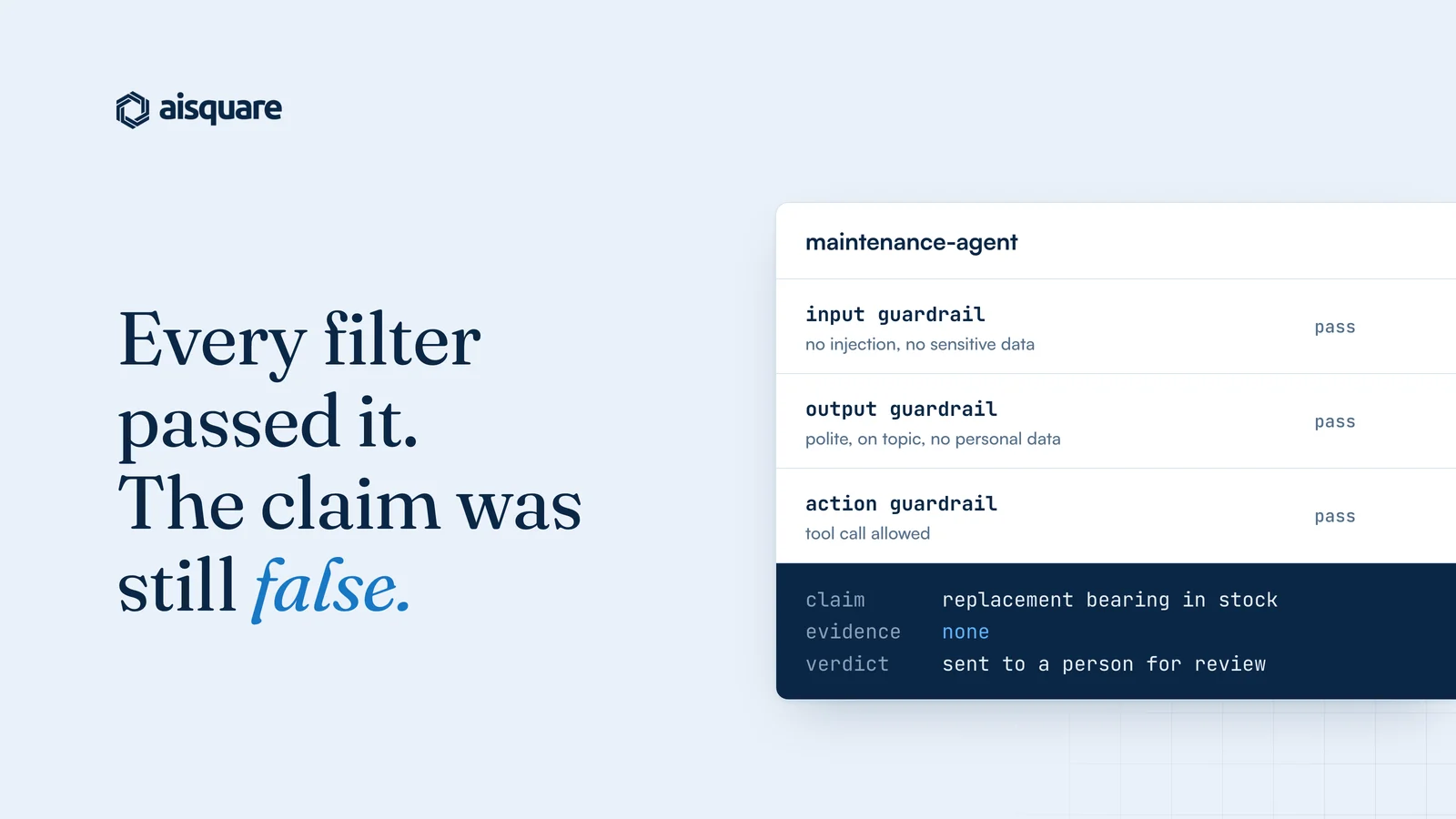
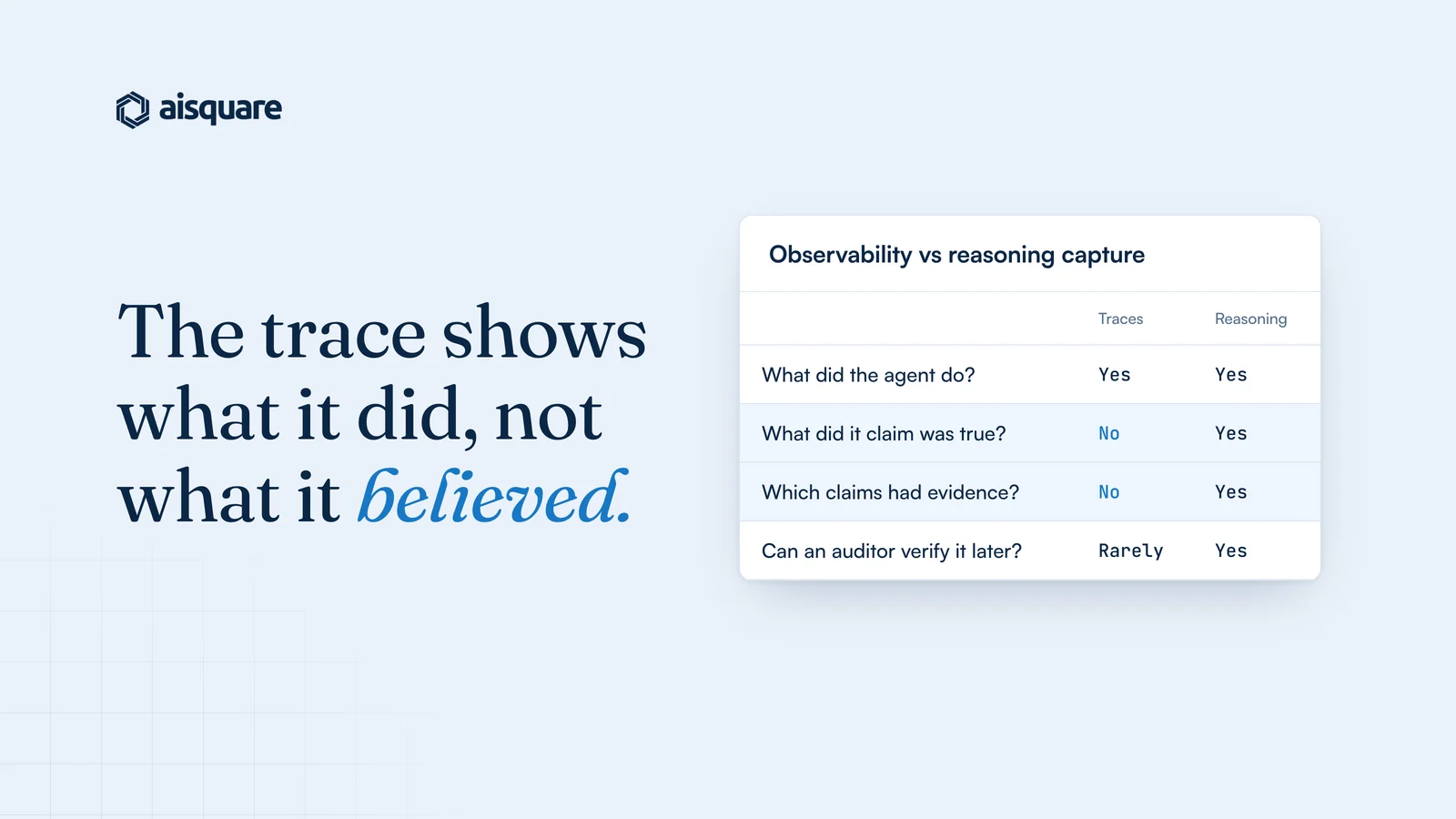
- The reviewer has nothing to check. If all a person sees is the final answer, they are judging whether it sounds right. That is a weak test.
A human in the loop who cannot see the reasoning is a signature on a form. The accountability is real and the control is missing.
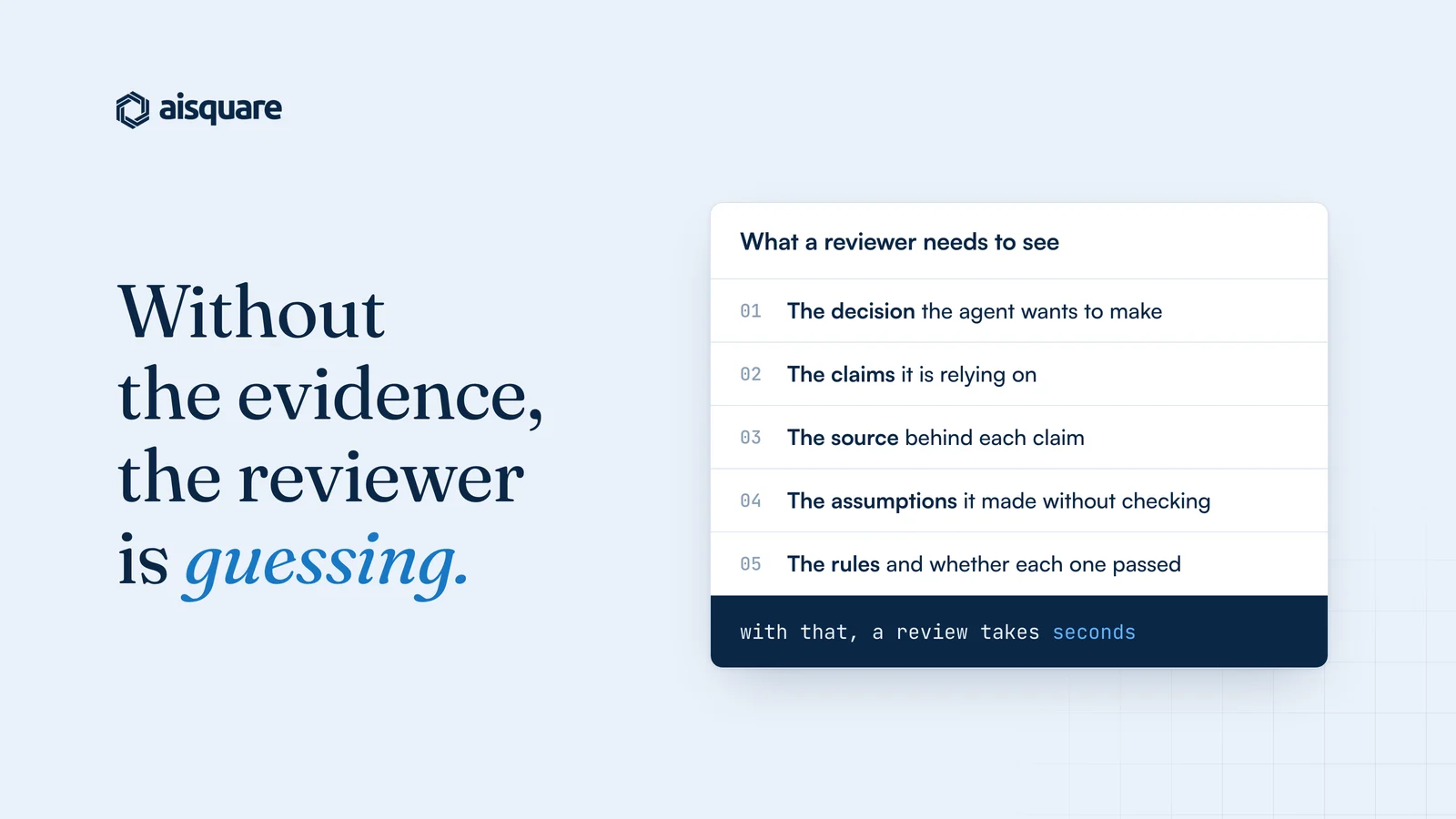
What a reviewer needs to see
For review to be a control, the person needs the evidence in front of them:
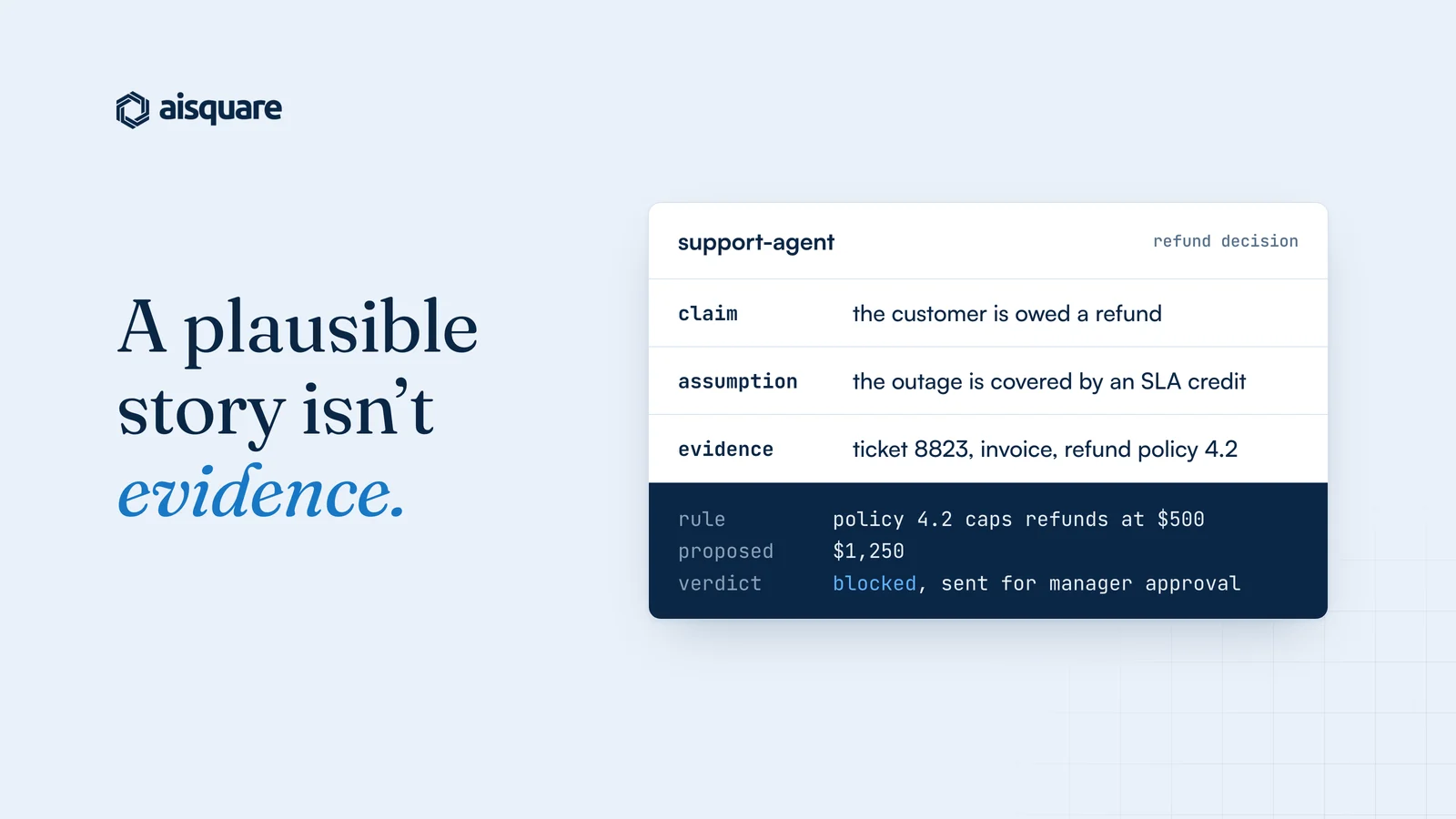
- The decision the agent wants to make
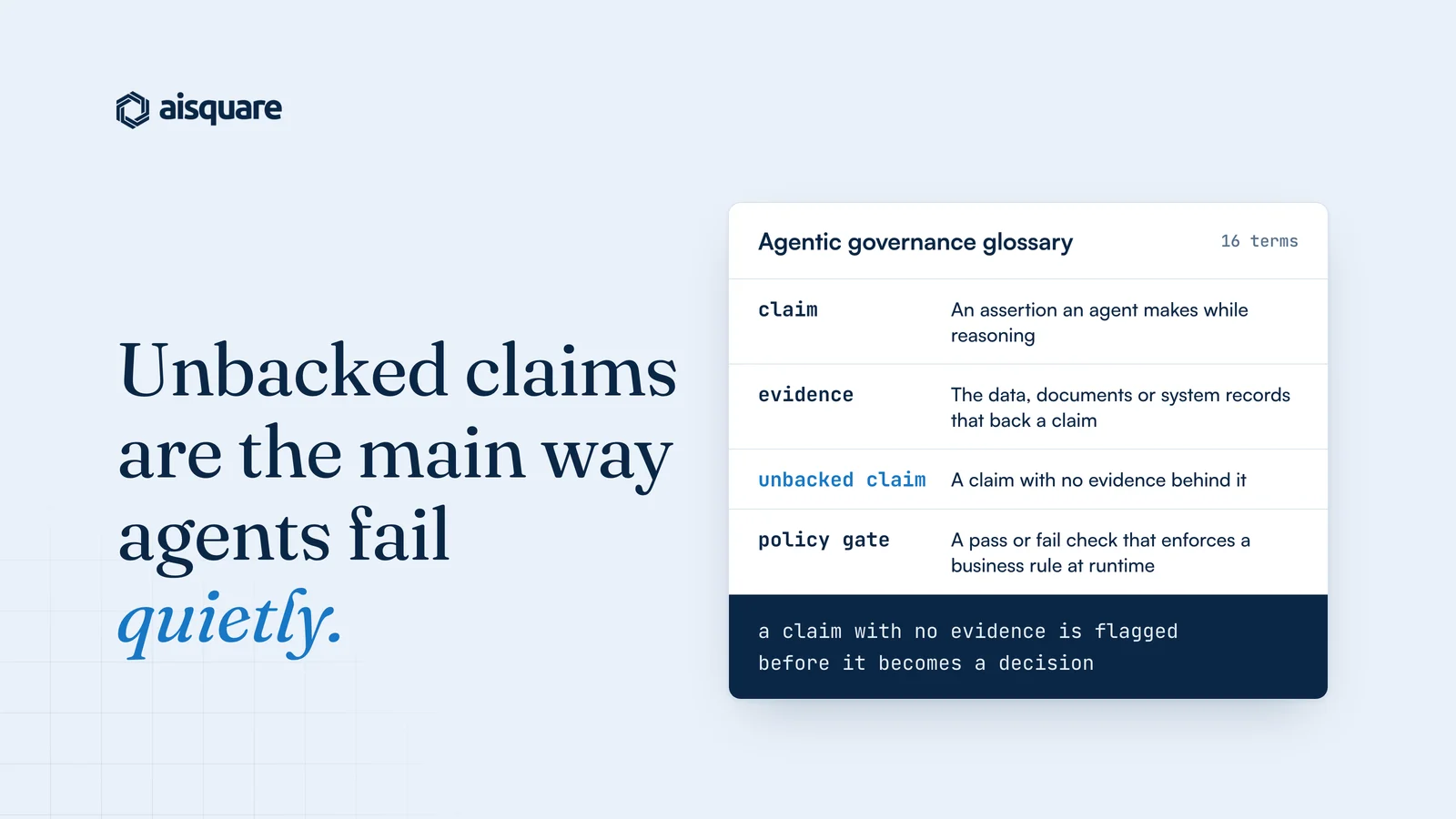
- The claims it is relying on
- The source behind each claim, or a flag that there is none
- The assumptions it made without checking
- The rules that applied and whether each one passed
With that, a review takes seconds and catches real problems. Without it, the reviewer is guessing.
How to decide which actions need a human
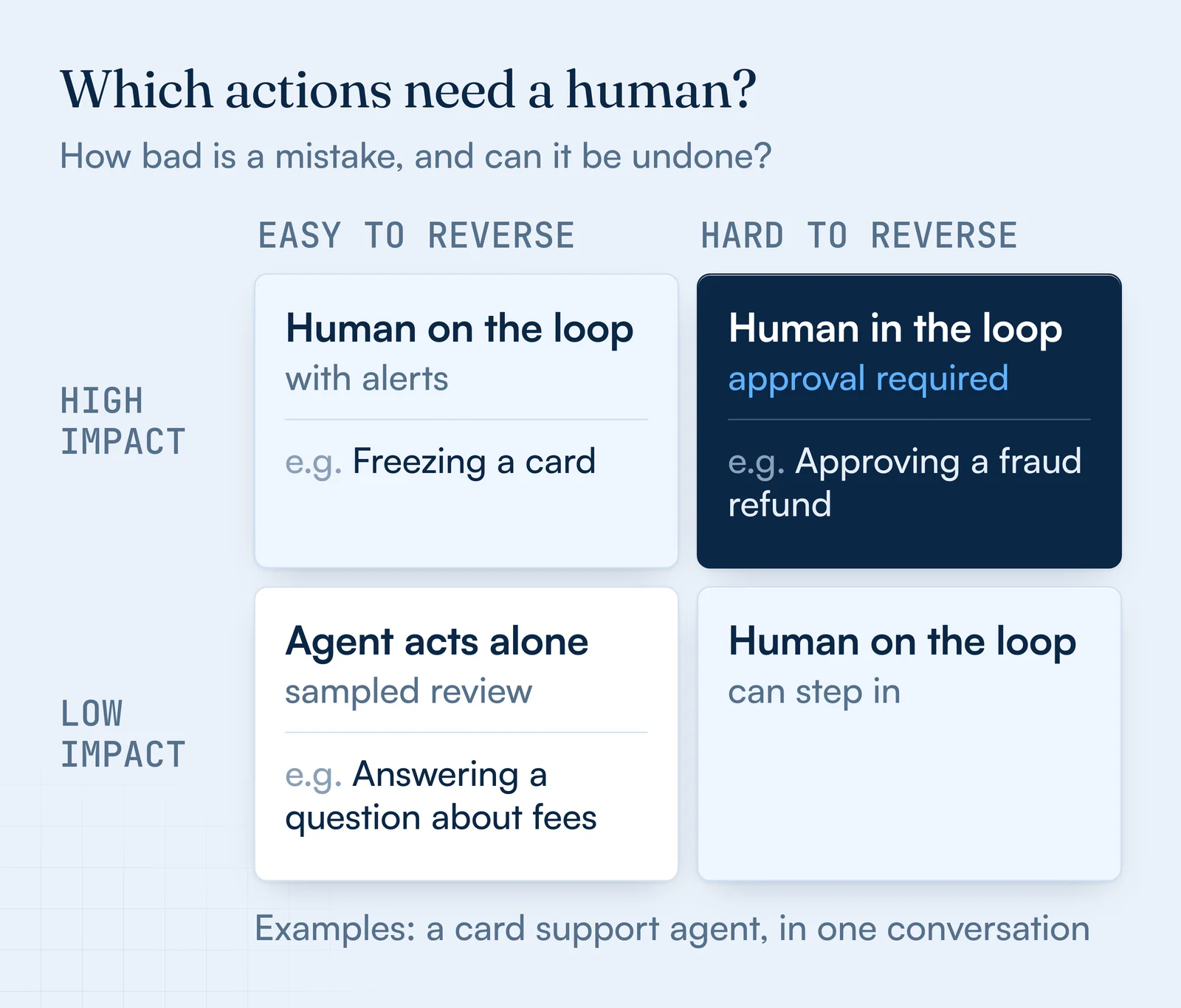
Sort each action the agent can take by two questions: how bad is a mistake, and can it be undone?
| Easy to reverse | Hard to reverse | |
|---|---|---|
| Low impact | Agent acts alone, sampled review | Human on the loop |
| High impact | Human on the loop, with alerts | Human in the loop, approval required |
A card support agent shows how this works in one conversation. Answering a question about fees can run alone. Freezing a card is reversible and urgent, so the agent acts and a person is alerted. Approving a fraud refund is high impact, so it waits for the fraud team.
Autonomy should be earned
The level of oversight should change as evidence builds up. An agent that has handled a task correctly a thousand times, with records to show it, can move from approval to monitoring for that task. An agent that starts failing moves back.
This gives you a trust curve in place of a fixed ceiling. Review time goes to the decisions that need it, and the agent takes on more scope as it proves itself.
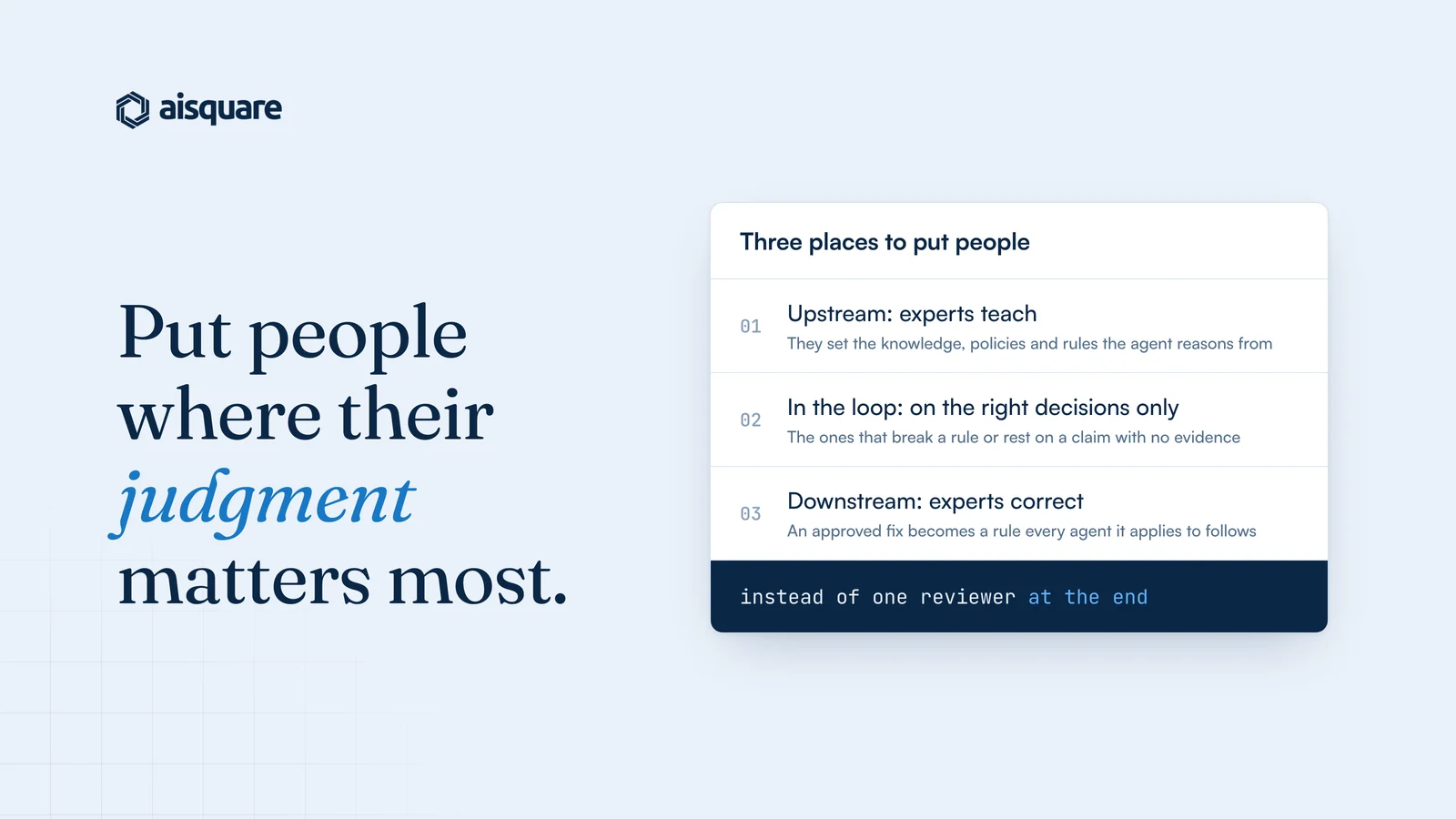
It also means every human correction should be saved. If a reviewer fixes the same mistake twice, the system has failed to learn. A correction should become a rule that applies to every agent from then on.
What regulators expect
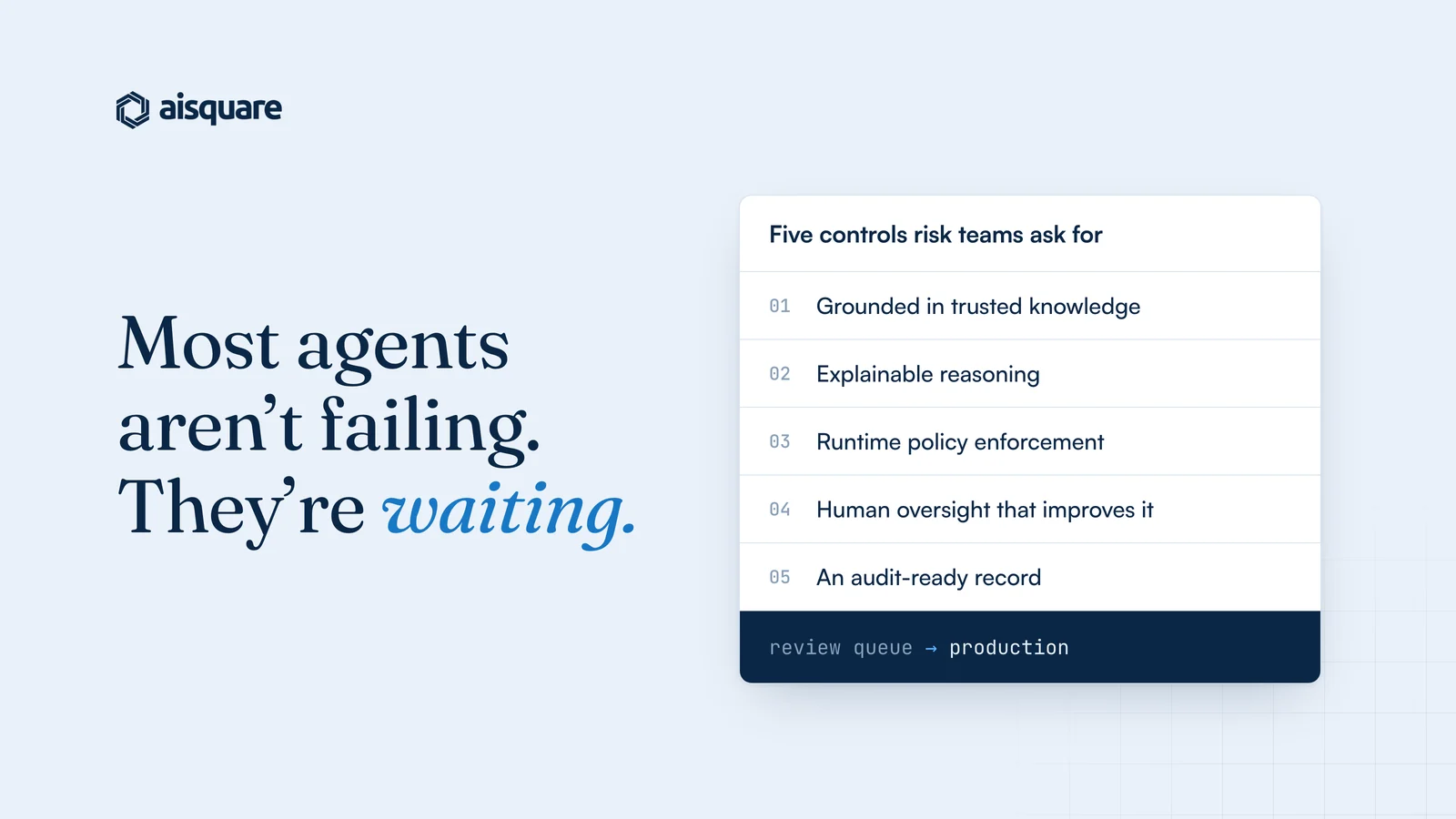
Human oversight appears in most AI rules and standards. The EU AI Act requires human oversight for high-risk systems, and the NIST AI RMF treats it as part of managing AI risk. The common thread is that oversight has to be effective. A person who can stop the system and understands what it is doing counts. A rubber stamp does not.
Check with your counsel on what applies to you.
Where AISquare fits
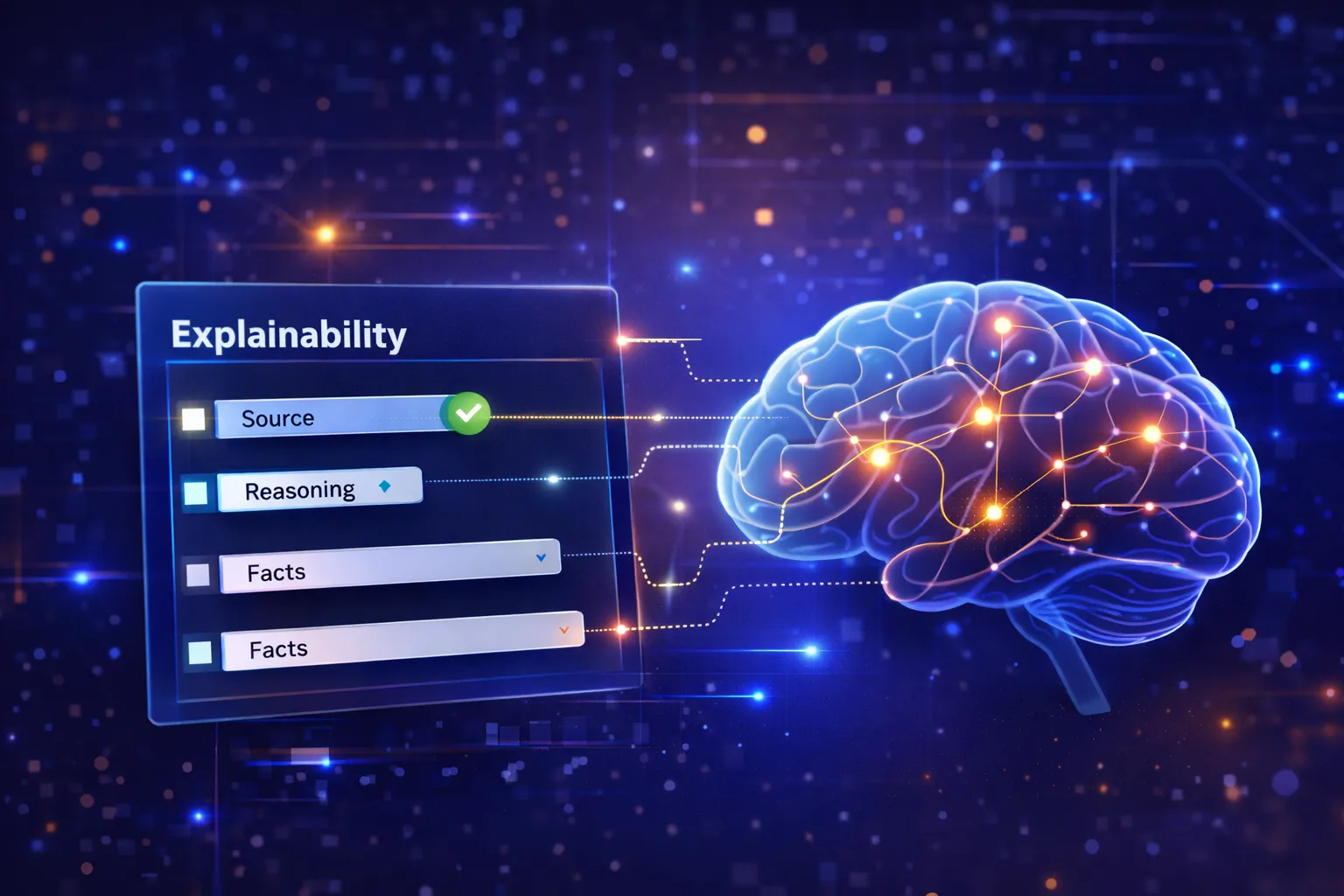
AISquare gives reviewers the reasoning behind each agent decision in plain language, with claims, evidence and assumptions laid out. Its policy engine routes actions to allow, block or escalate to a person based on your rules. Each approved correction becomes a rule, for one agent or the whole fleet, so people review new problems and stop repeating old ones. See how this fits into AI agent governance.
FAQ
What does human in the loop mean in AI?
It means a person reviews or approves an AI decision before it takes effect, so a human stays responsible for the outcome.
What is the difference between human in the loop and human on the loop?
In the loop, the human approves each decision first. On the loop, the AI acts and the human monitors and can intervene.
Do AI agents always need a human in the loop?
No. Match oversight to risk. Require approval for high-impact, irreversible actions and let tested, low-risk actions run with monitoring.
Next step
See what your reviewers would see for one of your agent’s decisions. Book a demo.
Related reading: AI agent governance · AI agent guardrails · Agent observability · AI governance framework · AI governance tools · AI audit trail · AI hallucination examples · AI BOM · Human-in-the-loop AI agents
Get your agents into production
AISquare captures the reasoning behind every agent decision, enforces your rules on every run, and keeps a record your risk team can check.