Creating an AI knowledge layer on top of your project repository
What if your codebase could explain itself? Here's how to build an AI-powered knowledge layer that turns your repository into a living, queryable resource for your entire team.
 Zahwah JameelDevRel Associate3 min read
Contents · 9 sections
Your codebase knows more than you think
Every project repository is a goldmine of institutional knowledge — architecture decisions buried in PR descriptions, context hidden in commit messages, tribal knowledge scattered across README files that nobody updates. The problem isn't a lack of information. It's that the information is inaccessible at the moment you need it.
An AI knowledge layer changes that. It sits on top of your existing repo and makes everything in it queryable, contextual, and conversational.
What is a knowledge layer?
Think of it as a semantic index over your project. Instead of grepping through files or scrolling through Confluence pages, you ask a question in natural language and get an answer grounded in your actual codebase.
- "Why did we switch from REST to GraphQL in the billing service?"
- "What's the retry logic for failed webhook deliveries?"
- "Who last touched the auth middleware and what did they change?"
The knowledge layer retrieves relevant code, docs, and history — then synthesizes an answer.
The architecture
At a high level, you need three things:
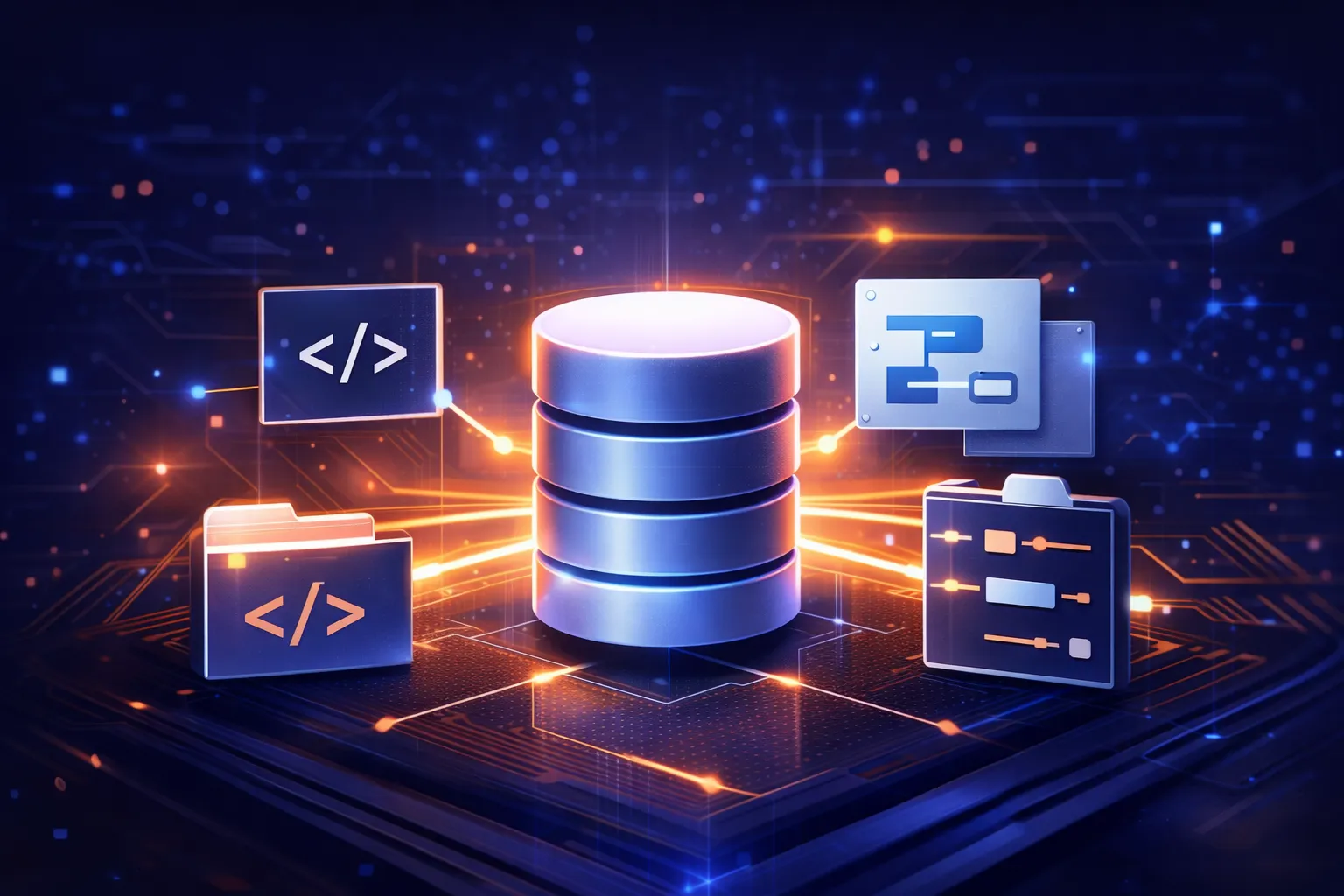
- Ingestion pipeline — Parse your repo's code, markdown, commit history, PR discussions, and issue threads into chunks. Each chunk gets embedded into a vector space.
- Retrieval layer — When a query comes in, embed the question and find the most semantically relevant chunks using vector similarity search.
- Generation layer — Feed the retrieved context into an LLM with a carefully crafted system prompt that keeps answers grounded and cites sources.
Chunking strategies that actually work
Naive chunking by line count will destroy context. Instead:
- Code files — Chunk by function or class boundaries. Use AST parsing where possible.
- Markdown/docs — Chunk by heading hierarchy. A section under
## Authenticationshould stay together. - Commit messages + PRs — Treat each as an atomic chunk, enriched with metadata (author, date, files changed).
- Overlap — Add 10–15% overlap between chunks to preserve boundary context.
Keeping it fresh
A stale knowledge layer is worse than no knowledge layer. Set up:
- Git hooks or CI triggers that re-index changed files on every merge to main
- Incremental embedding — Only re-embed chunks whose source content has changed (hash-based diffing)
- TTL on metadata — Flag old PR discussions as lower-relevance over time
Prompt engineering for grounded answers
The generation prompt matters enormously. Key principles:
- Instruct the model to only answer based on retrieved context
- Ask it to cite file paths and line numbers
- Include a "I don't have enough context to answer this" fallback
- Provide the repo's tech stack and conventions in the system prompt for better code understanding
What we've seen work
Teams that build this report dramatic improvements:
- Onboarding time drops by 40–60% — New engineers get answers without asking seniors
- PR review quality improves — Reviewers can quickly understand the "why" behind changes
- Decision archaeology becomes instant — No more "does anyone remember why we did X?"
Getting started
You don't need to build everything from scratch. Start small:
- Index your README files and key documentation
- Add code files from your core modules
- Wire up a simple chat interface (even a Slack bot works)
- Iterate on chunking and prompts based on real questions from your team
The goal isn't perfection on day one. It's making your codebase a little more self-aware every week.
The bigger picture
An AI knowledge layer isn't just a developer convenience — it's an organizational memory system. As teams grow, people leave, and codebases evolve, the knowledge layer ensures that understanding persists.
Your repo already has the answers. You just need to make them findable.
Get your agents into production
AISquare captures the reasoning behind every agent decision, enforces your rules on every run, and keeps a record your risk team can check.