Agentic Governance Platform: How to Choose One for AI Agents
Choosing an agentic governance platform? Compare the three types of tools, the eight capabilities that matter, and the questions to ask vendors.

Contents · 6 sections
Search for an agentic governance platform and you’ll find three very different kinds of product sold under the same label. Picking the wrong kind is how teams end up with a tidy model inventory and agents still stuck in review.
This guide sorts the market into those three types, lists the eight capabilities that matter once agents are involved, and gives you the questions to ask on vendor calls.
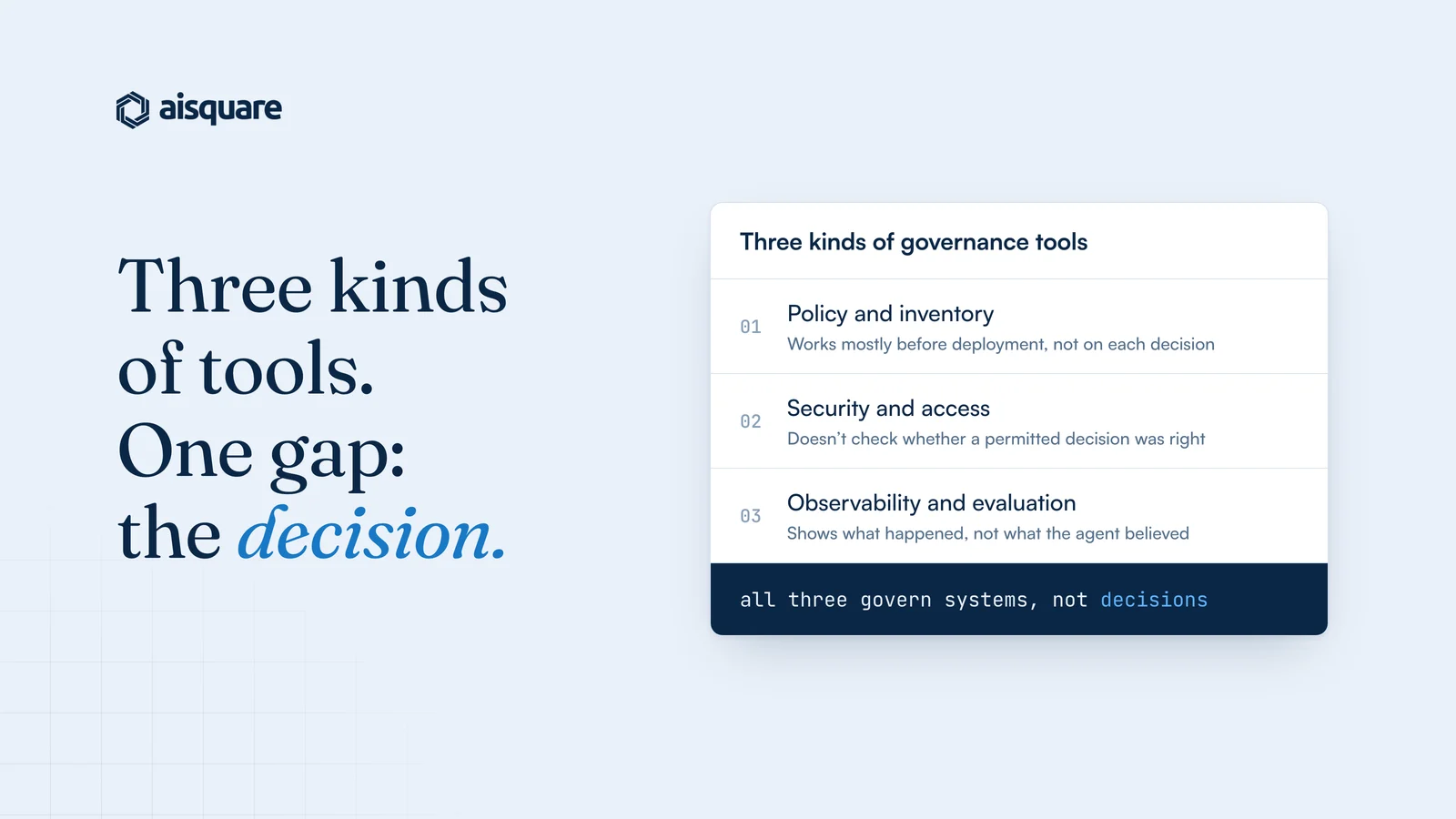
Three kinds of governance tools
| Type | What it does | Good for | Gap for agents |
|---|---|---|---|
| Policy and inventory platforms | Register models, map them to regulations, run risk assessments and approvals | Model lifecycle and regulatory mapping | Works mostly before deployment, not on each decision |
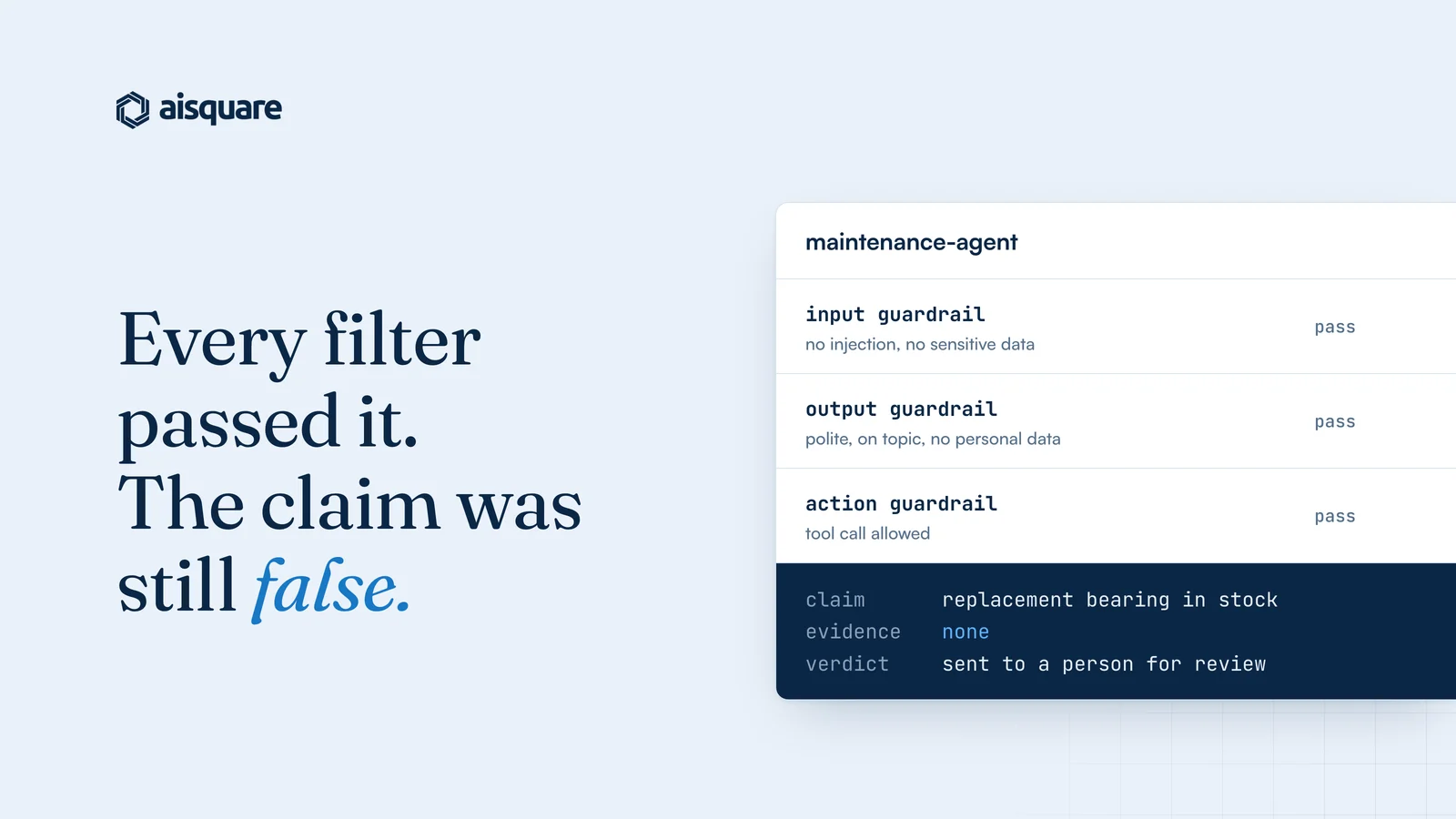
| Security and access tools | Control identity, permissions and data access, and detect threats | Stopping unauthorized actions | Doesn’t check whether a permitted decision was right |
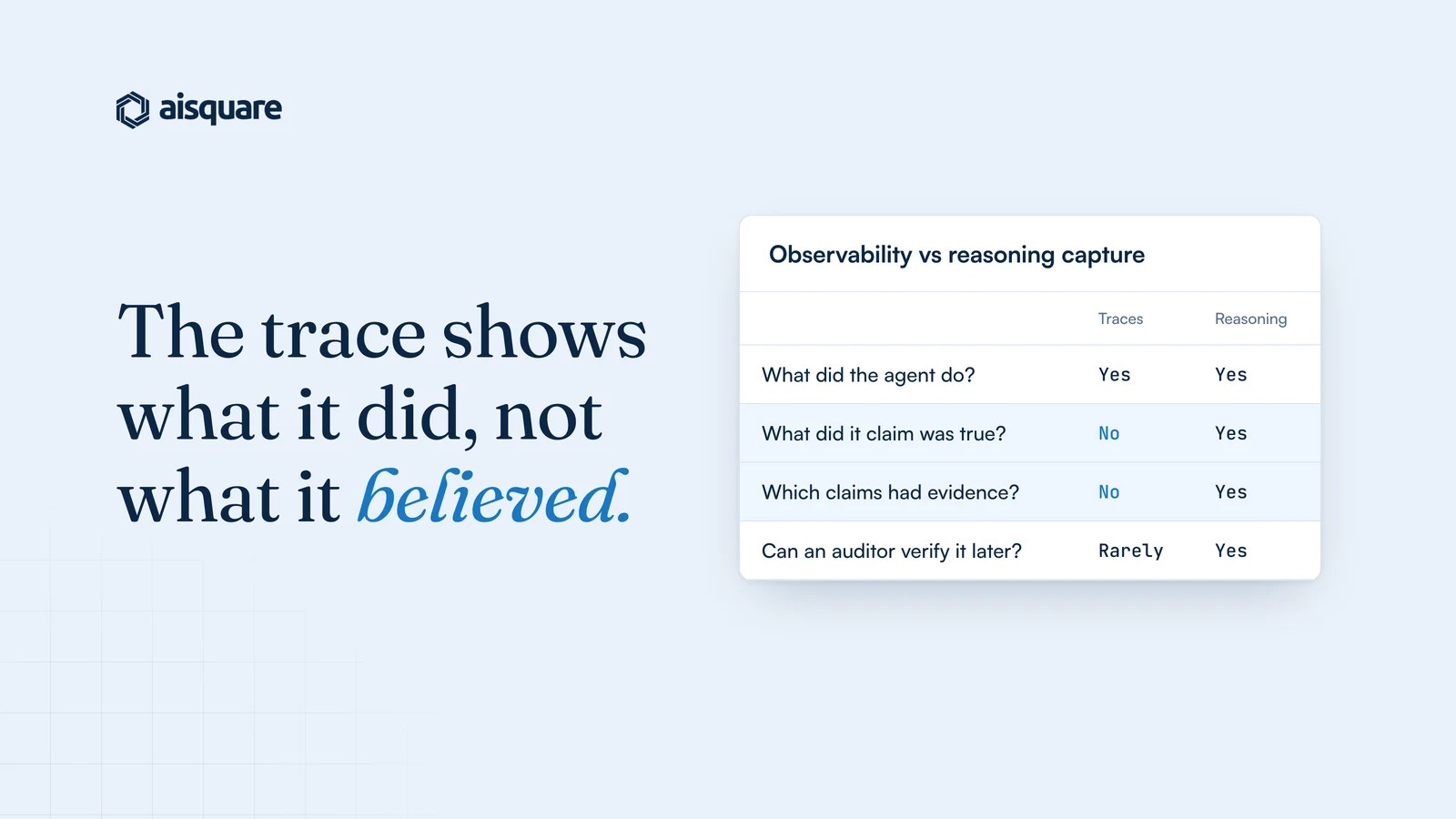
| Observability and evaluation | Trace runs, measure cost and latency, score outputs | Engineering health | Shows what happened, not what the agent believed or which rule applied |
Most enterprises end up needing something from all three. The useful question is what still falls between them.
The gap: decisions, not systems
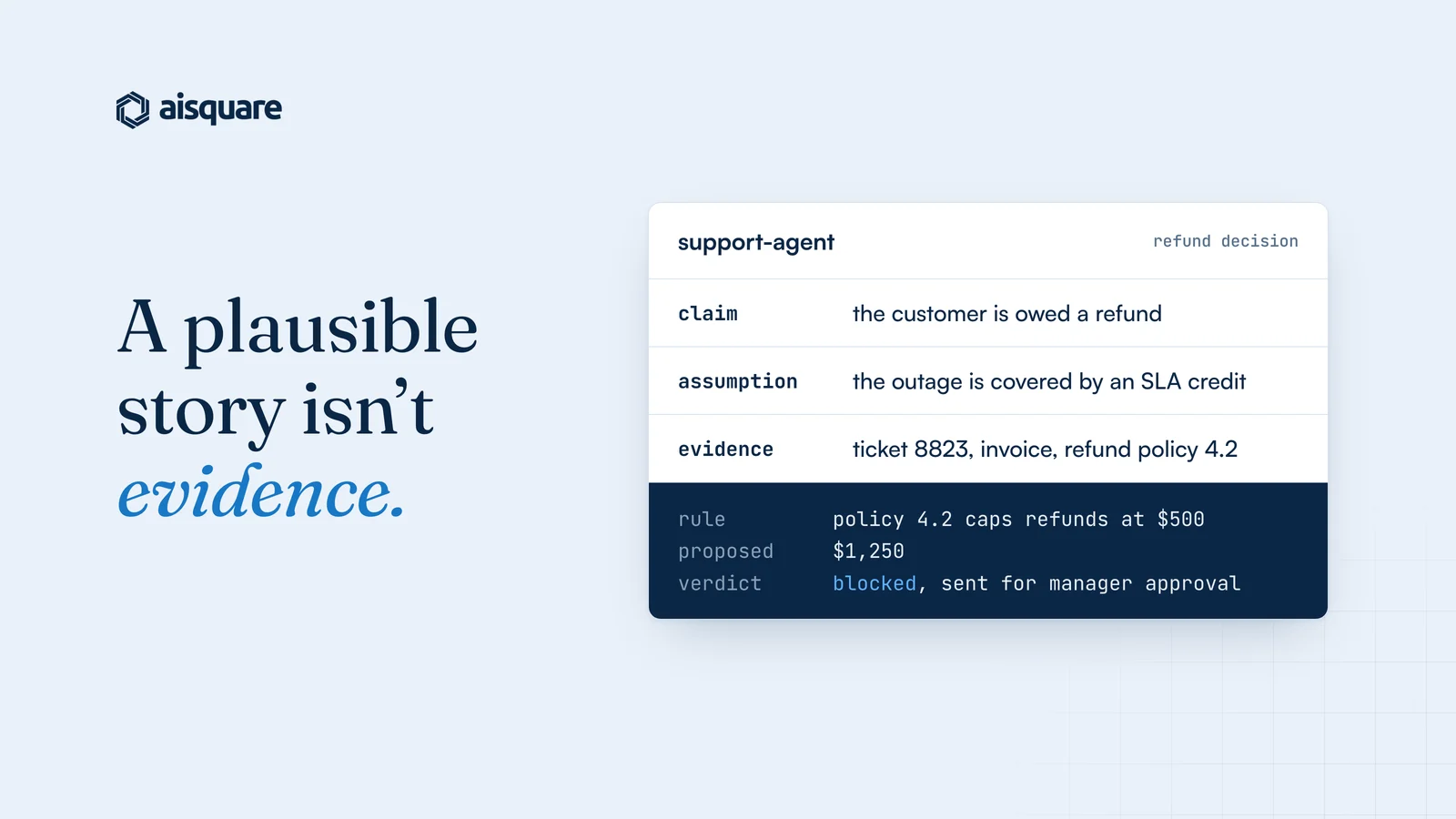
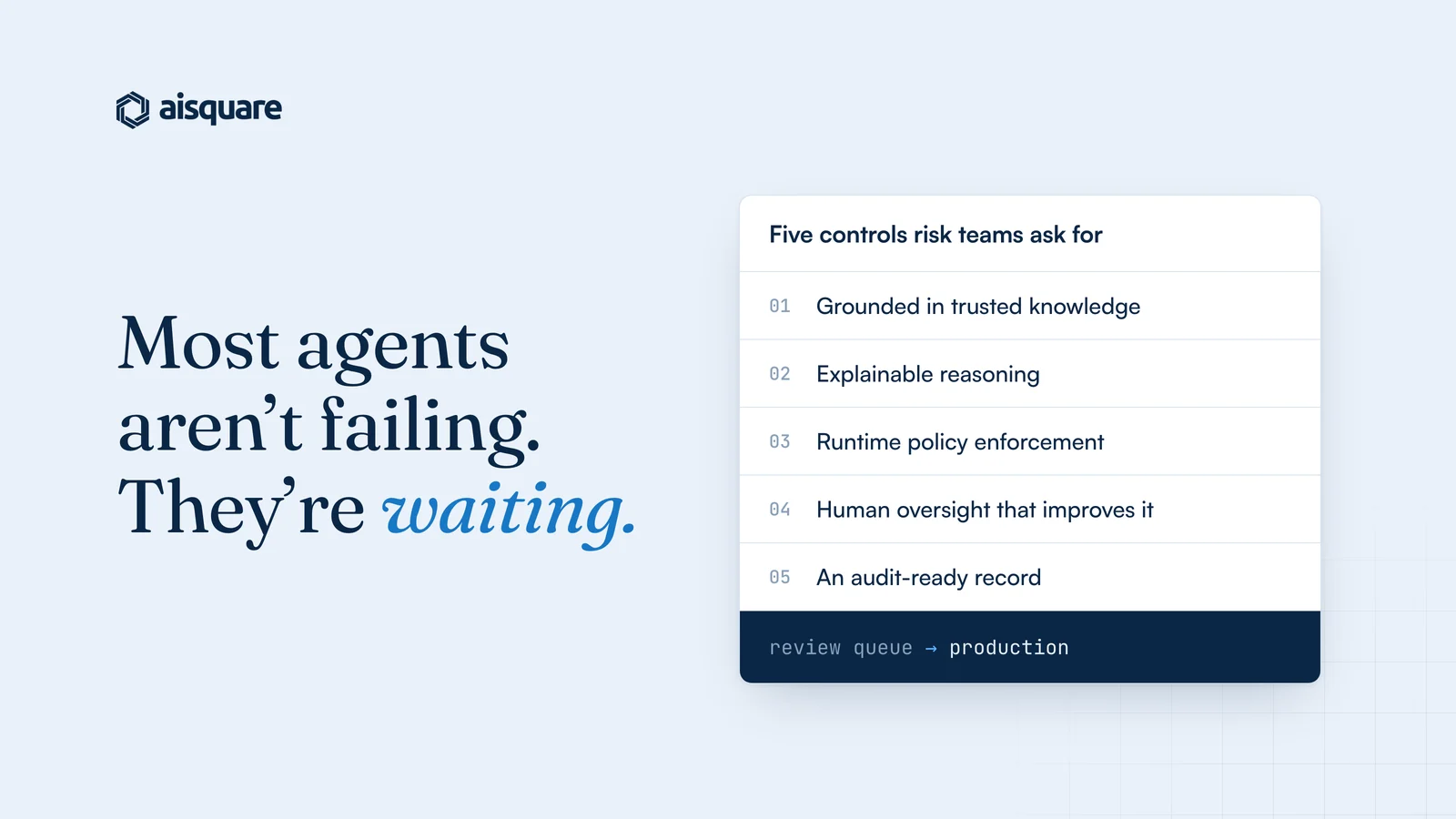
All three types govern systems: which models exist, who can access what, how runs perform. Agents add a new unit to govern, the individual decision. A risk reviewer signing off an agent wants to know what it knew, what it claimed, what evidence backed those claims, and which rule it was checked against, for every decision, not once at approval time.
That’s the layer to look for if your goal is getting agents into production. Our guide to agentic governance explains why it matters.
Eight capabilities that matter for agents
- Works across vendors. You’ll run agents on more than one model and framework. The governance layer has to be neutral.
- Grounds agents in your knowledge. Agents should reason from your policies, documents and context, and reviewers should be able to see what the agent was given.
- Captures reasoning per decision. Claims, assumptions and evidence for each decision, with anything unbacked flagged before it becomes an action.
- Enforces policy at runtime. Rules checked on every run as pass or fail gates, not just written in a policy document. See AI agent guardrails.
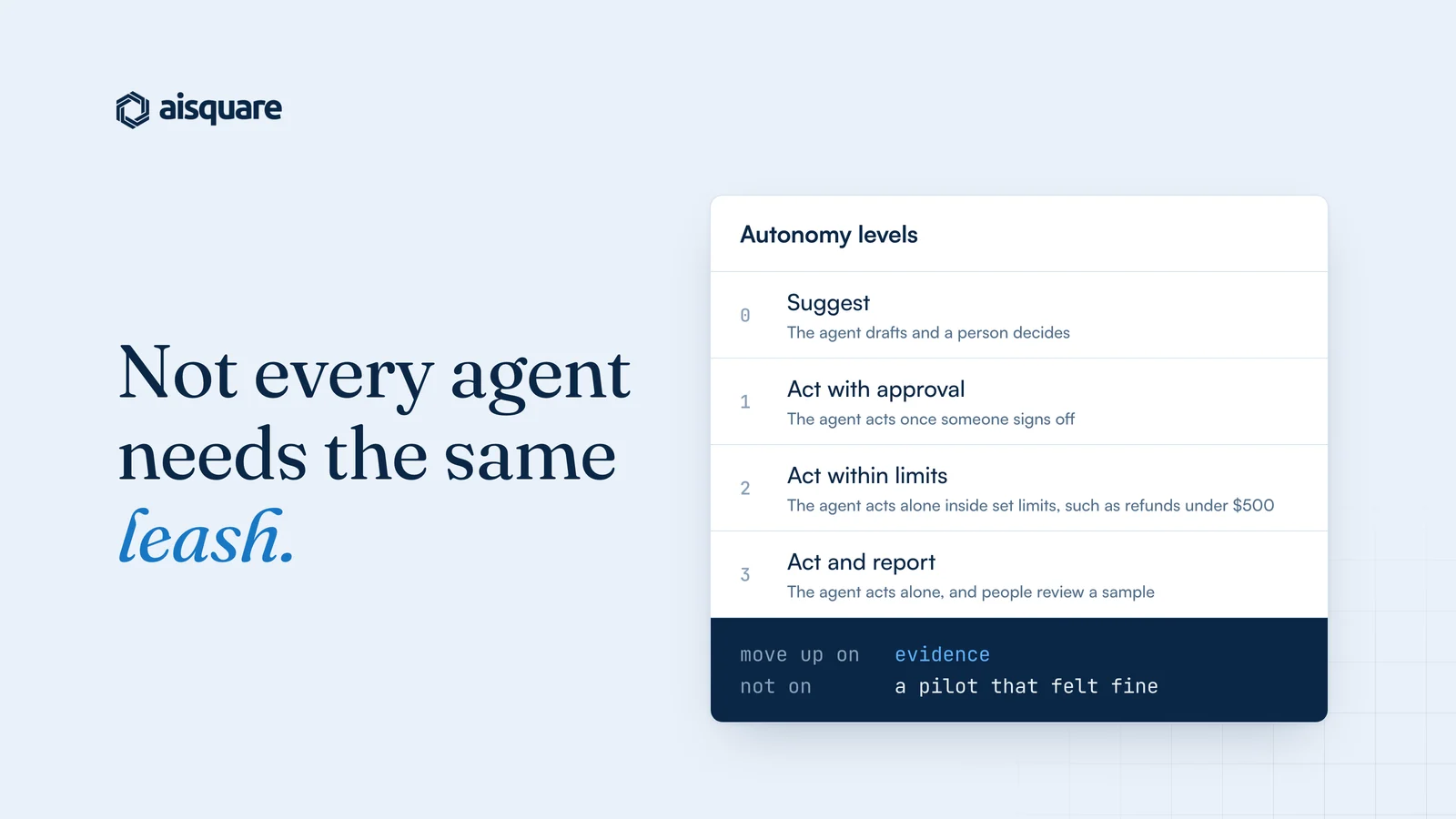
- Turns review into improvement. When an expert corrects an agent, the platform should turn that correction into an approved rule every relevant agent follows.
- Keeps a verifiable record. A signed record of each decision plus an AI bill of materials listing the models, tools, data and rules used.
- Maps to the frameworks you report against. The EU AI Act, NIST AI RMF and ISO/IEC 42001 at a minimum.
- Runs in your environment. Your cloud, your keys, with your reasoning data staying yours.
Questions to ask on vendor calls
- Show me one agent decision from start to finish: what it believed, what backed it, and which rule it was checked against.
- What happens when a rule fails at runtime? Who gets notified, and what does the record show?
- If my expert corrects an agent today, what changes for every other agent tomorrow?
- Can an auditor verify a decision from six months ago without your team’s help?
- Which models and agent frameworks do you support today?
- Where do my data and reasoning records live?
- What does a pilot look like, and how long until we see evidence on a live agent?
A vendor who can’t answer the first question with a live demo is governing systems, not decisions.
Build or buy?
Many teams start with homegrown logging and a spreadsheet of rules. That’s fine for one agent. It breaks down at a fleet: rules drift between agents, evidence ends up scattered across tools, and nobody can reproduce a decision when an auditor asks. A rough test is that once you have more than two agents in production, or a regulator asks for decision-level evidence, building it yourself costs more than buying.
Where AISquare fits
AISquare is the Collective Intelligence Platform for Agent Trust. It’s built for the decision layer, and it complements the other three types rather than replacing them. AISquare captures reasoning with RML, our Reasoning Markup Language, enforces your rules on every run, turns expert corrections into rules, and keeps a signed record of each decision, inside your environment.
Book a demo and bring the vendor questions above. We’ll answer them on a live agent.
Read next: Agentic governance framework: a practical template and Explainable AI agents: explaining decisions, not just models.
Get your agents into production
AISquare captures the reasoning behind every agent decision, enforces your rules on every run, and keeps a record your risk team can check.