Agentic Governance Glossary: 16 Terms Every Team Should Know
Plain-English definitions of 16 agentic governance terms, from RML and AIBOM to earned autonomy and cognitive surrender, with links to go deeper.

Contents · 18 sections
AI agents brought a new vocabulary with them, and not everyone uses the words the same way. This glossary gives plain-English definitions of the terms that come up most when teams try to get agents into production and keep them trustworthy. Each entry links to a longer guide where there is one.
Terms A to Z
Agent observability
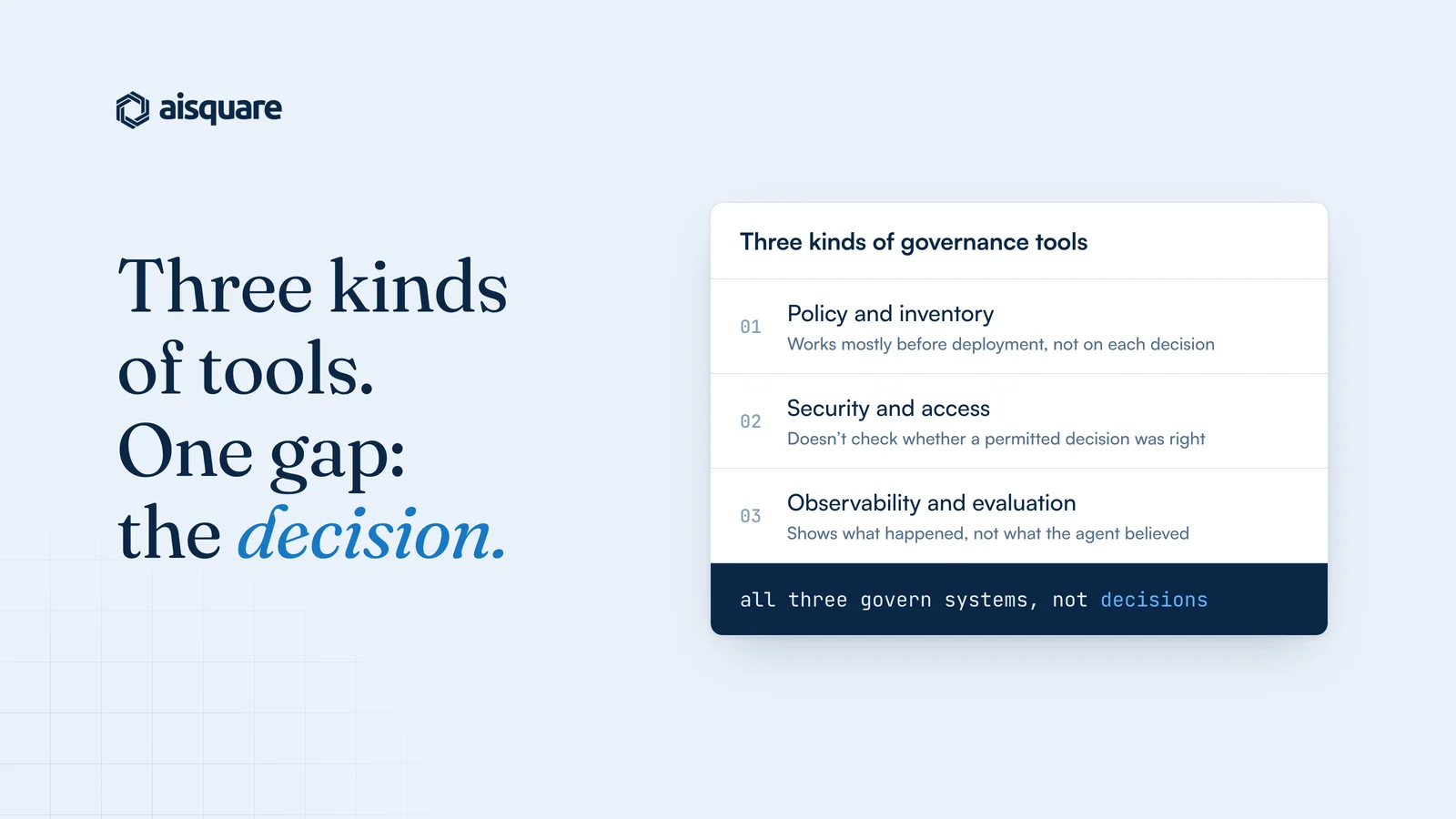
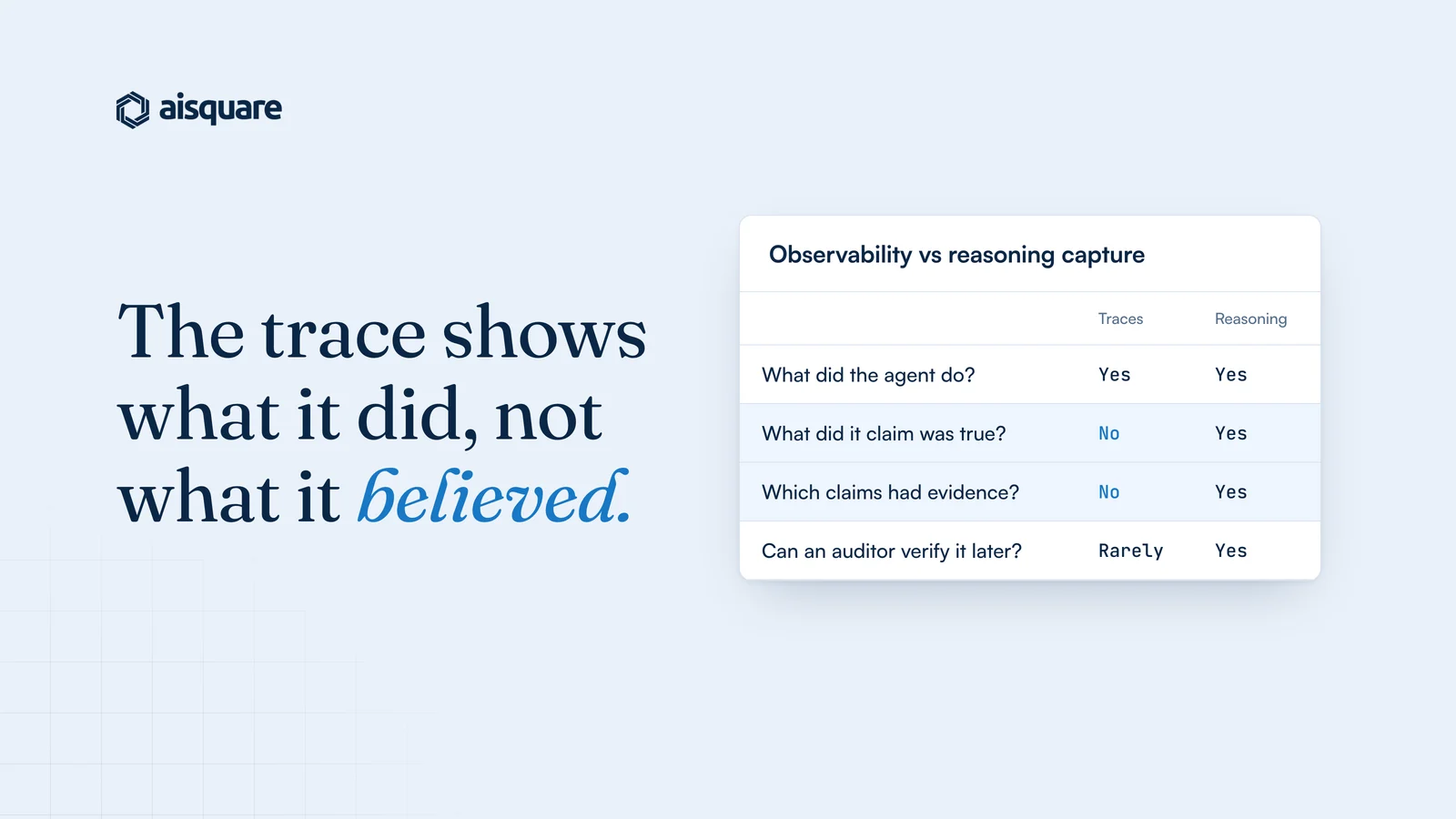
Tracing and monitoring what an agent did: steps, tool calls, latency, cost and errors. It shows what happened, but not what the agent believed. See Agent observability: why traces are not enough.
Agentic governance
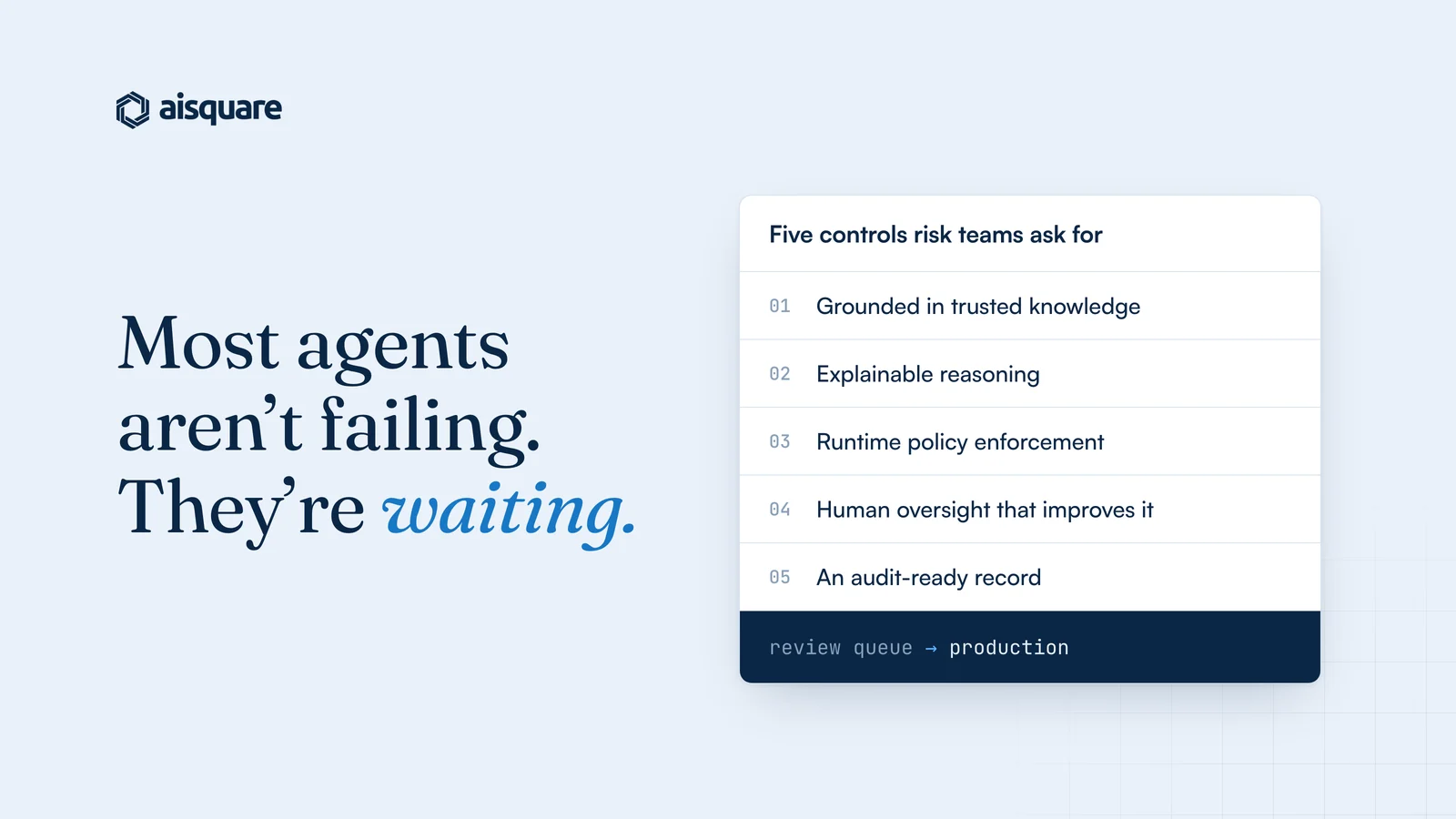
The controls that decide what an AI agent may do, prove why it did it, and improve how it does it over time. Unlike traditional model governance, it works decision by decision, on every run. See Agentic governance framework: a practical template.
AI agent
Software that uses an AI model to plan and take actions toward a goal, such as calling tools, reading systems and making a chain of decisions, rather than producing a single answer.
AI bill of materials (AIBOM)
A record of everything that went into an agent decision: the models, tools, data and rules used. It works like a parts list for auditors. AISquare produces AIBOMs in the CycloneDX format.
Assumption
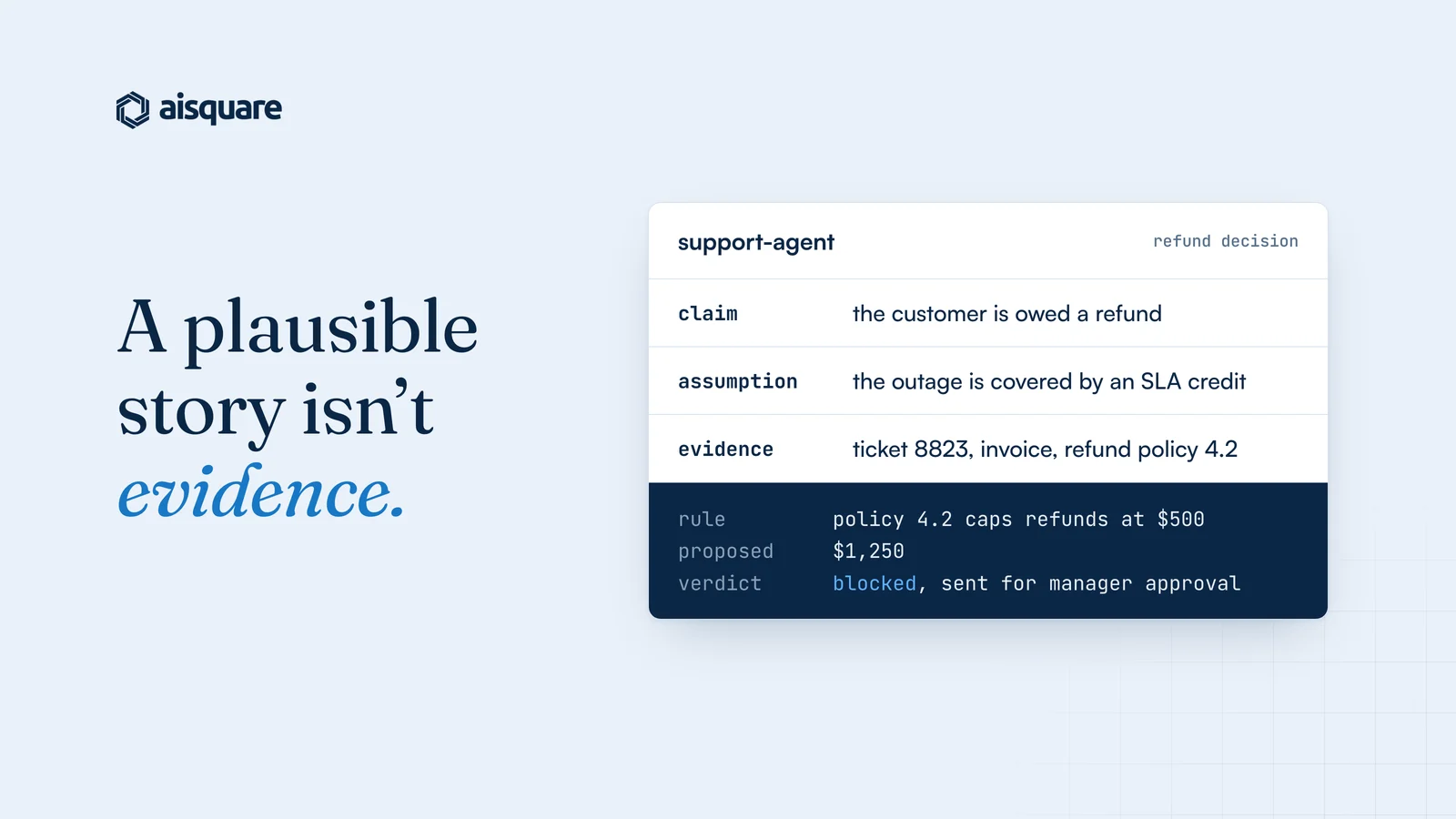
A premise an agent reasoned from without checking it. For example, assuming an outage is covered by an SLA credit. In RML, assumptions are recorded separately so reviewers can test them.
Attestation
A cryptographic signature on a decision record, showing it hasn’t been changed since it was made. It lets an auditor verify a decision months or years later.
Autonomy levels
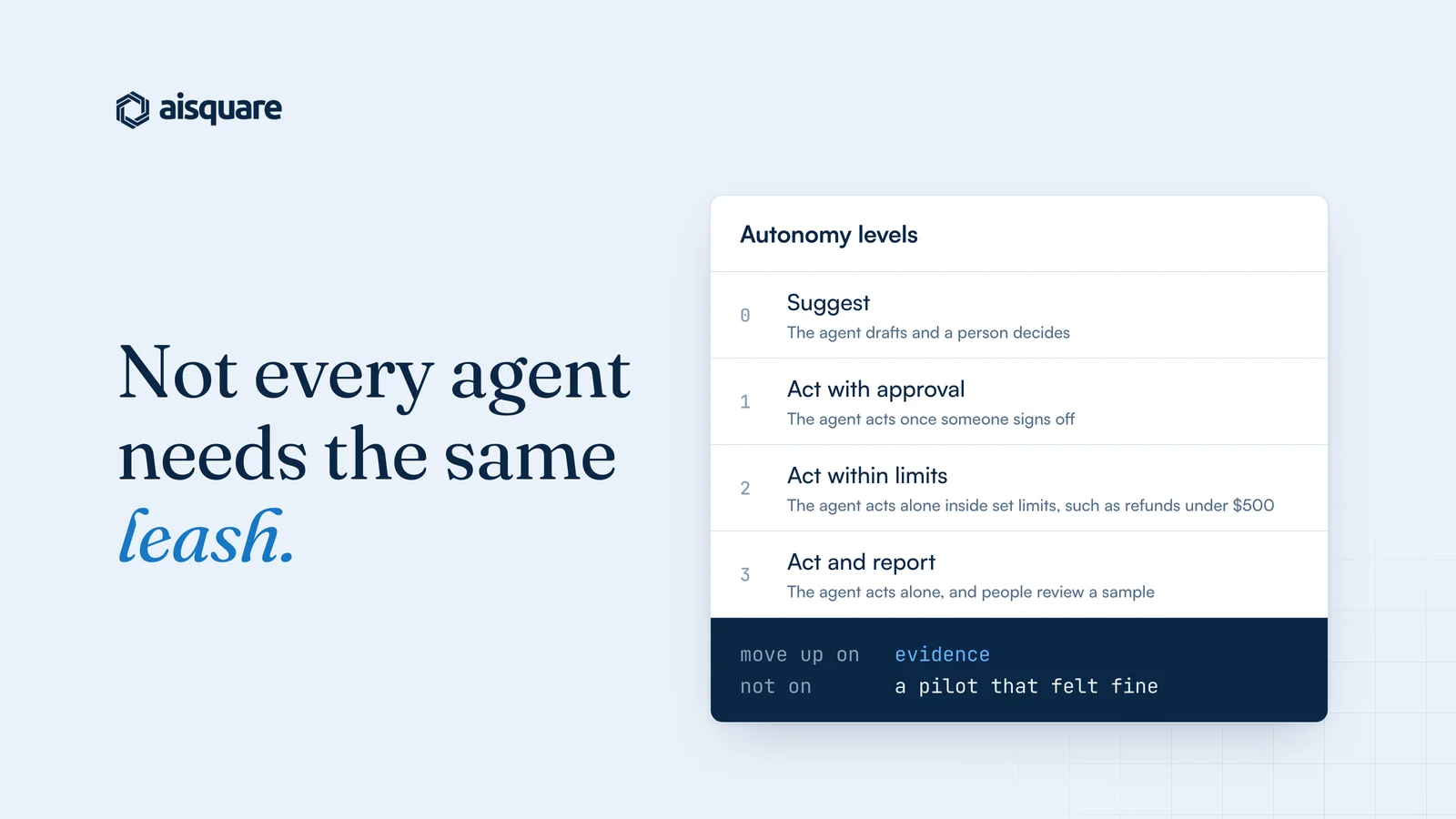
Agreed limits on how much an agent can do alone, from suggesting only, through acting with approval and acting within limits, to acting alone with sampled review.
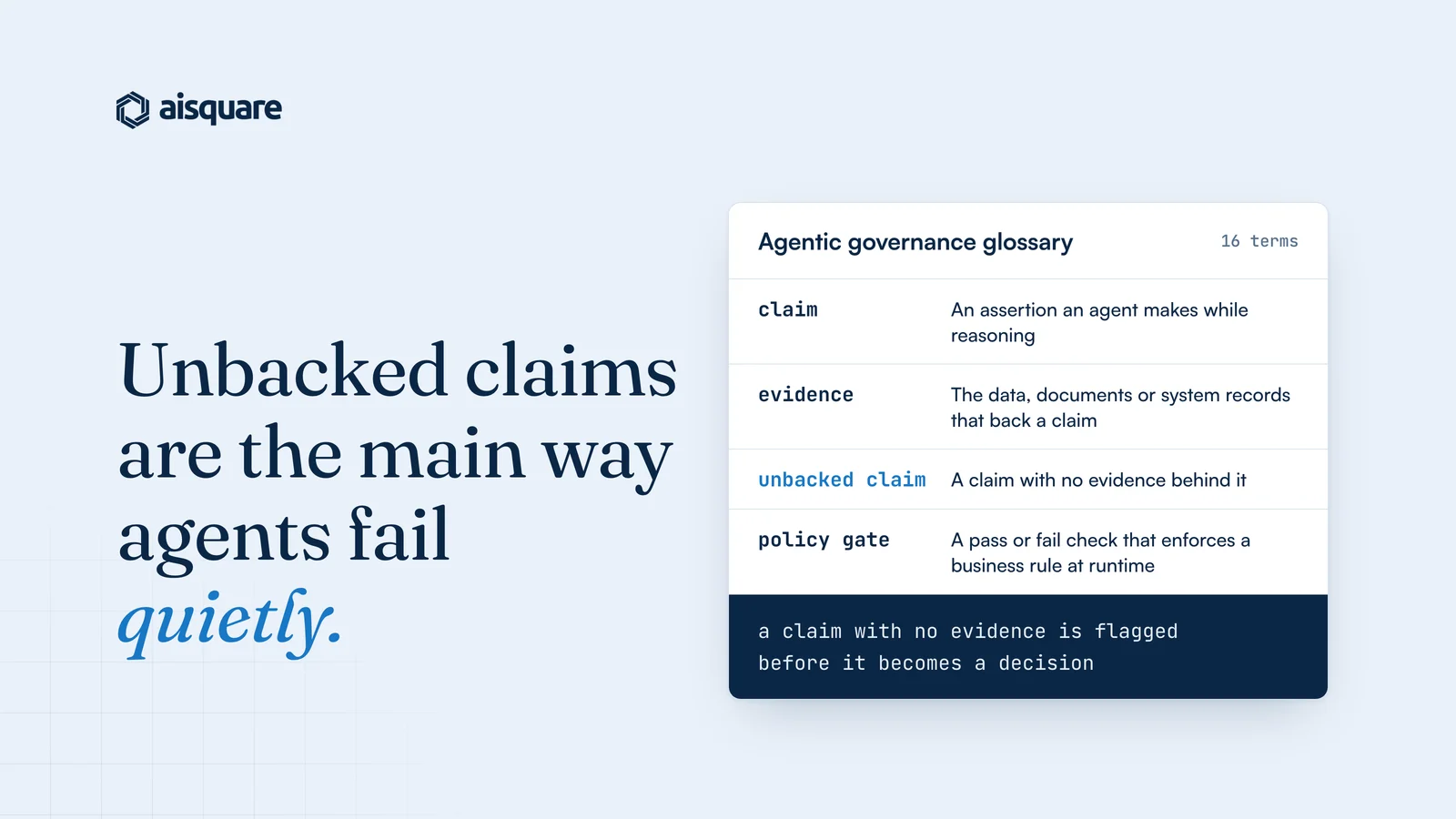
Claim
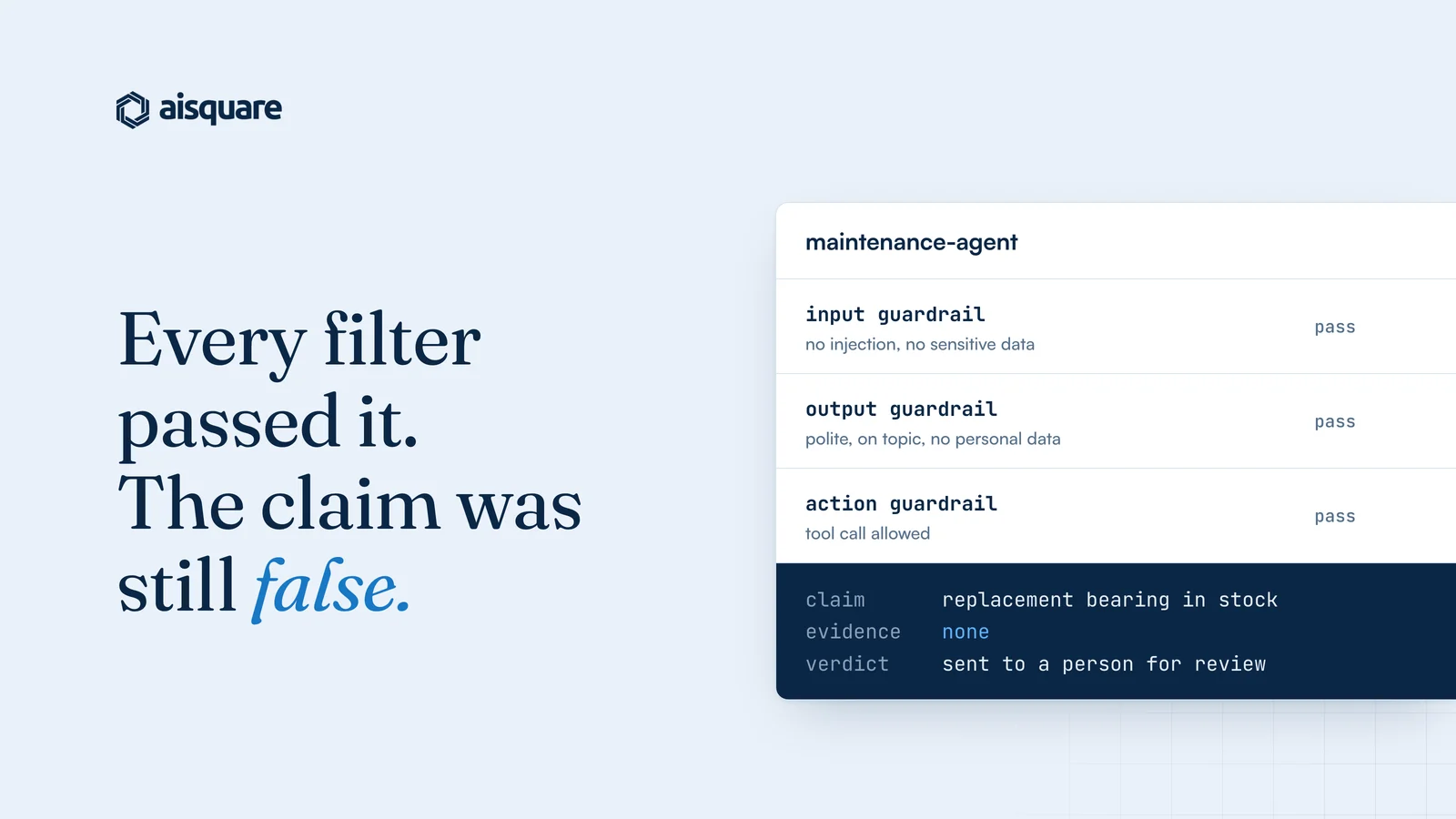
An assertion an agent makes while reasoning, such as “a replacement part is in stock”. In RML, each claim is checked against your systems.
Cognitive surrender
What happens when people only approve AI output instead of checking it. Over time their judgment weakens and oversight becomes a formality. See Human-in-the-loop AI agents: why approval isn’t oversight.
Earned autonomy
The idea that an agent should get more freedom only when evidence shows it has handled its current level well, for example a set number of runs with no policy breaches and no unbacked claims.
Evidence
The data, documents or system records that back a claim, such as a ticket, an invoice or a policy clause. A claim with no evidence is flagged before it becomes a decision.
Guardrails
Checks around an agent that block unsafe inputs, outputs or actions. Most guardrails catch content and access problems, not broken business rules. See AI agent guardrails: what they catch and what they miss.
Human in the loop
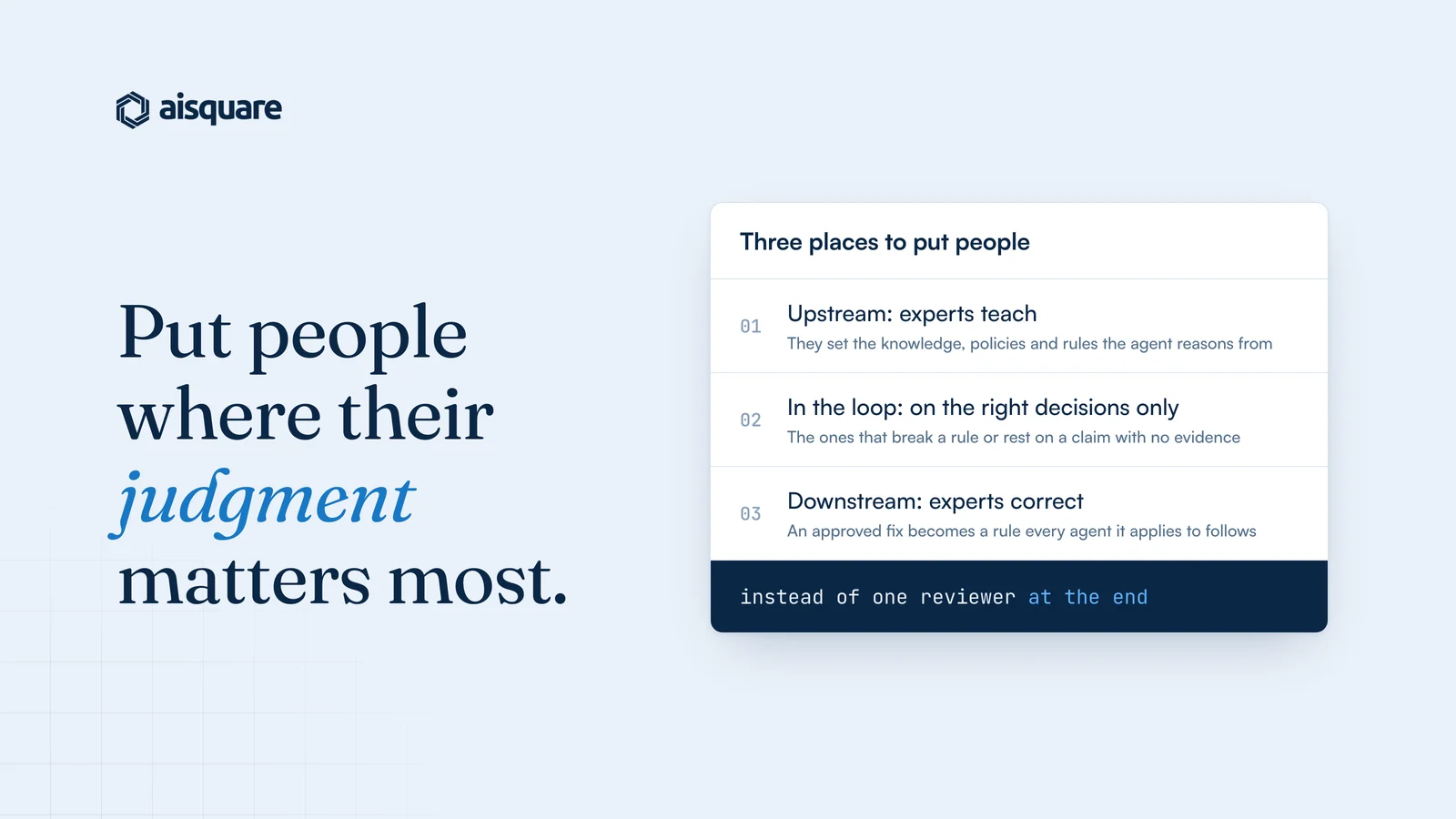
A design where people review or approve agent work. It works best when people see the reasoning and only the decisions that need them, not every output.
Policy gate
A pass or fail check that enforces a business rule at runtime, before a decision goes out. For example, blocking a $1,250 refund because policy caps refunds at $500, and sending it for approval.
Reasoning Markup Language (RML)
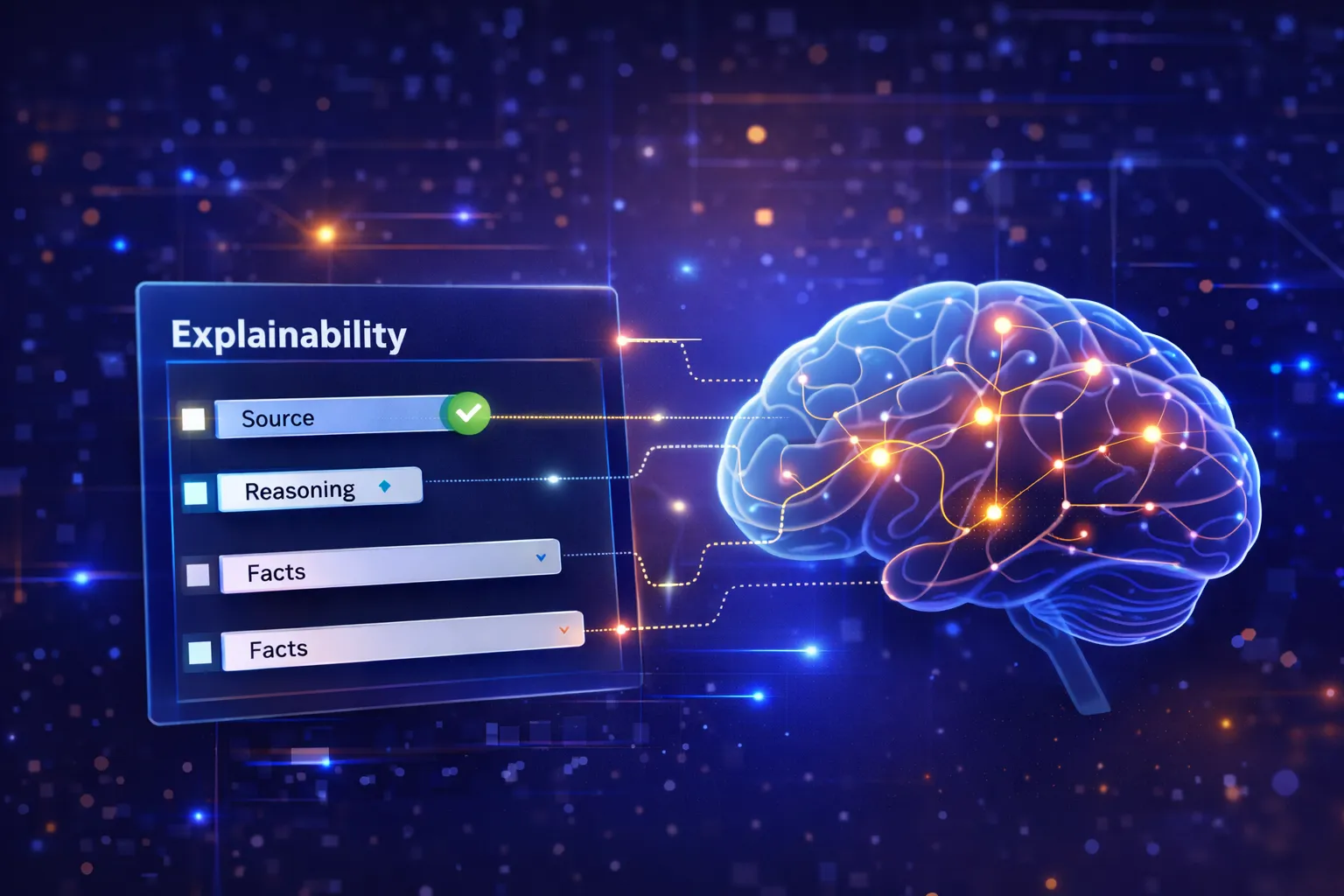
AISquare’s structured format for agent reasoning. It breaks every decision into claims, assumptions and evidence, so reasoning can be checked by software and people alike. It’s proposed as an open format for reasoning evidence through the Trust & Safety Institute. See Explainable AI agents: explaining decisions, not just models.
Unbacked claim
A claim with no evidence behind it. Unbacked claims are the main way agents fail quietly: the answer looks confident, but nothing supports it.
Go deeper
New to the topic? Start with Agentic governance: how to get agents into production. If you’re comparing tools, read Agentic governance platform: how to choose one for AI agents.
Book a demo to see every term on this page working on a live agent.
Get your agents into production
AISquare captures the reasoning behind every agent decision, enforces your rules on every run, and keeps a record your risk team can check.