6 Examples of AI Hallucination and How to Prevent Them
Six real examples of AI hallucination, from Air Canada to a federal court, with what happened and the controls that stop it in customer-facing agents.

Contents · 16 sections
- Example 1: Air Canada’s chatbot invented a refund policy
- Example 2: New York City’s chatbot advised businesses to break the law
- Example 3: A lawyer filed court papers citing cases that did not exist
- Example 4: Google’s Bard got a fact wrong in its own launch ad
- Example 5: Cursor’s support bot made up a login policy
- Example 6: A consulting report included fabricated references
- What these examples have in common
- How hallucinations show up in customer-facing agents
- How to prevent AI hallucinations
- What to measure
- Where AISquare fits
- FAQ
- What is an example of an AI hallucination?
- Why do AI models hallucinate?
- Can AI hallucinations be eliminated?
- Next step
An AI hallucination is an answer that sounds confident and is false. The clearest example of hallucination is an AI inventing a fact, a source or a policy that does not exist. Below are six real cases, what happened, and how to stop the same thing in your own agents.
Example 1: Air Canada’s chatbot invented a refund policy
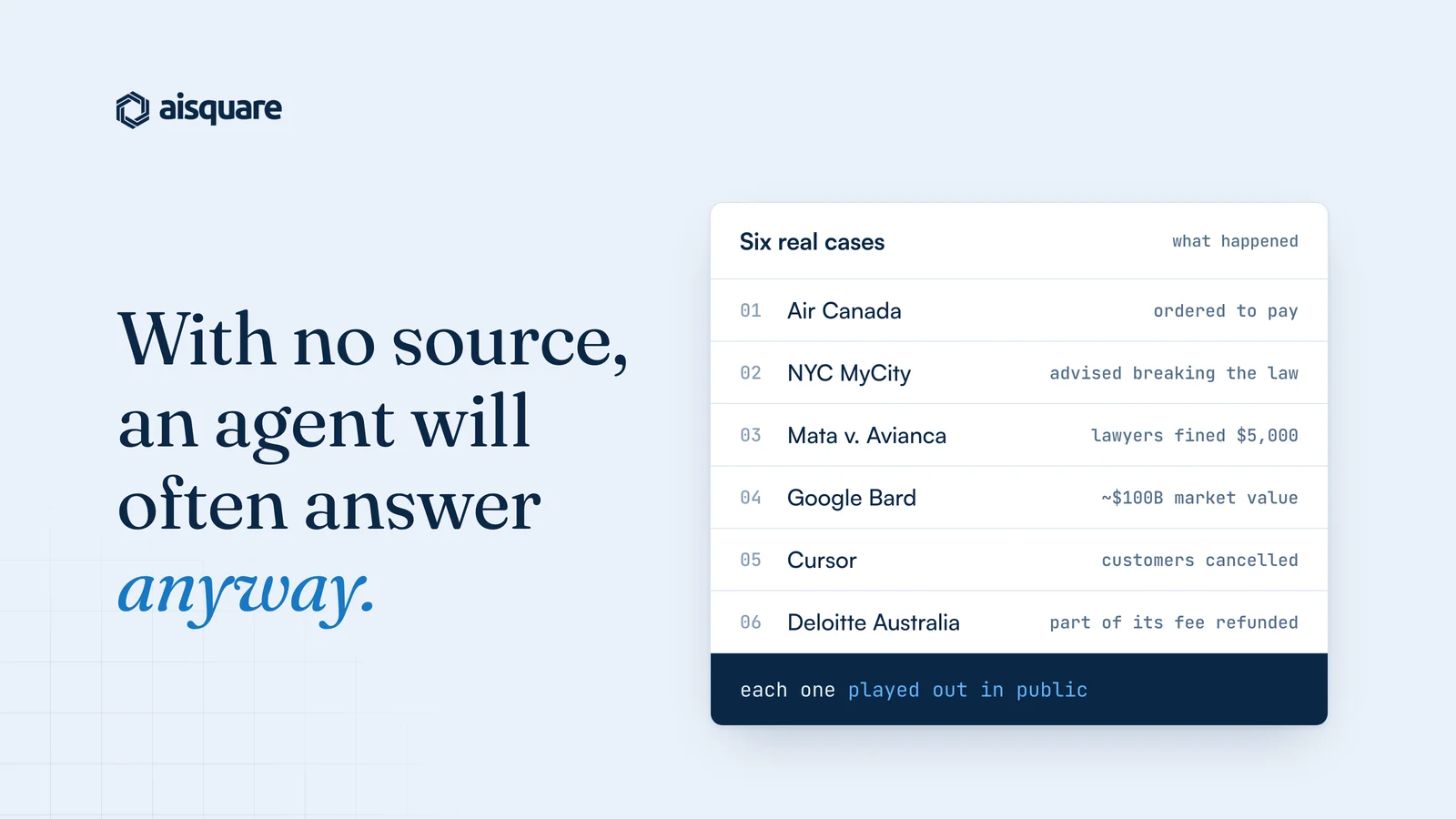
A passenger asked Air Canada’s website chatbot about bereavement fares. The chatbot said they could buy a ticket and claim the discount afterward. That was not the airline’s policy. When they were refused, they took the airline to a tribunal. Air Canada argued the chatbot was responsible for its own words. The tribunal disagreed and ordered the airline to pay.
The lesson: what your agent tells a customer is treated as what your company told them.
Example 2: New York City’s chatbot advised businesses to break the law
The city’s MyCity chatbot was built to help small business owners. Reporters found it telling employers they could take a share of workers’ tips and telling landlords they could turn away tenants with housing vouchers. Both are illegal in New York.
The lesson: an agent with no source for an answer will often produce one anyway.
Example 3: A lawyer filed court papers citing cases that did not exist
In Mata v. Avianca, a lawyer used ChatGPT to research a filing. It supplied six court decisions, with quotes and citations. None of them were real. The federal judge fined the lawyers $5,000.
The lesson: a fabricated source looks exactly like a real one unless something checks it.
Example 4: Google’s Bard got a fact wrong in its own launch ad
In its first promotional video, Google’s Bard said the James Webb Space Telescope took the first picture of a planet outside our solar system. It did not. Alphabet’s market value fell by about $100 billion that day.
The lesson: one confident error in front of the wrong audience is expensive.
Example 5: Cursor’s support bot made up a login policy
Users of the coding tool Cursor were being logged out when they switched devices. The company’s AI support agent told them this was a new policy limiting each subscription to one device. No such policy existed. Customers cancelled before the company corrected it and apologized.
The lesson: when a support agent lacks the real answer, it fills the gap with a plausible one.
Example 6: A consulting report included fabricated references
Deloitte Australia delivered a report to a federal government department that was later found to contain references to sources that did not exist. The firm confirmed generative AI had been used and agreed to refund part of its fee.
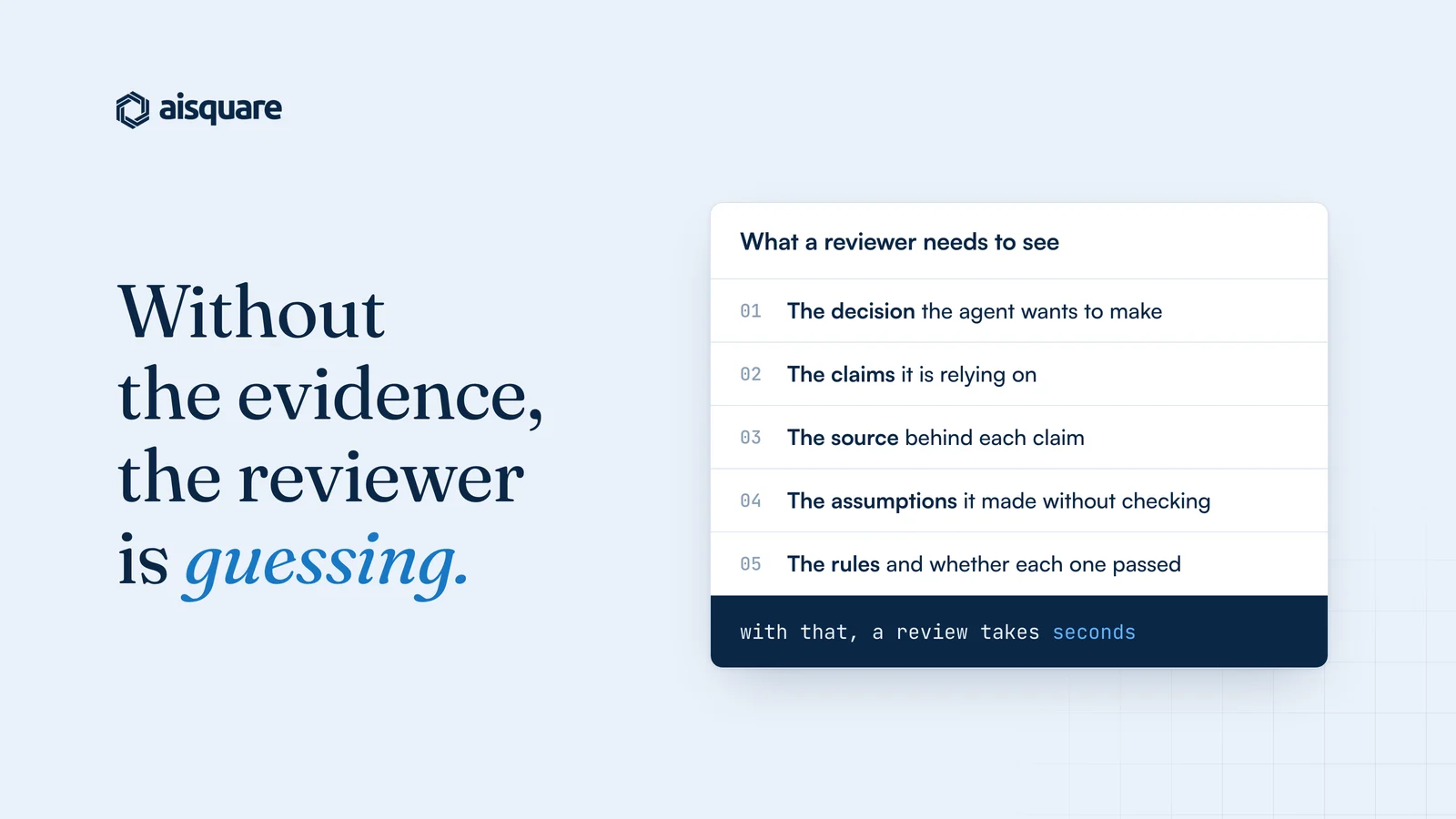
The lesson: hallucinations pass human review when the reviewer cannot see where each claim came from.
What these examples have in common
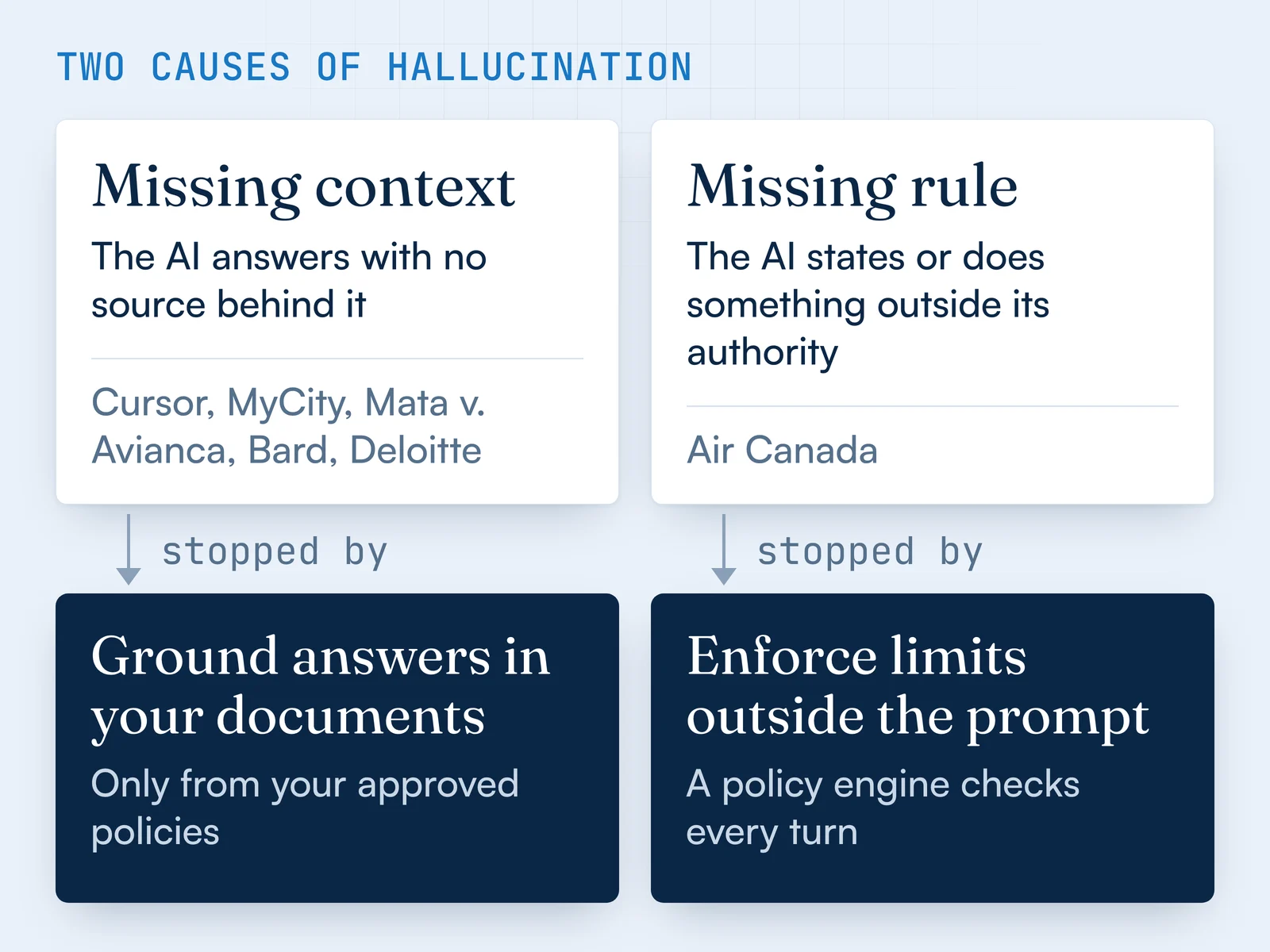
None of these failures was sophisticated, and each one played out in public. In every case the cause was one of two things.
| Cause | What it looks like | Examples |
|---|---|---|
| Missing context | The AI answers with no source behind it | Cursor, MyCity, Mata v. Avianca, Bard, Deloitte |
| Missing rule | The AI states or does something outside its authority | Air Canada |
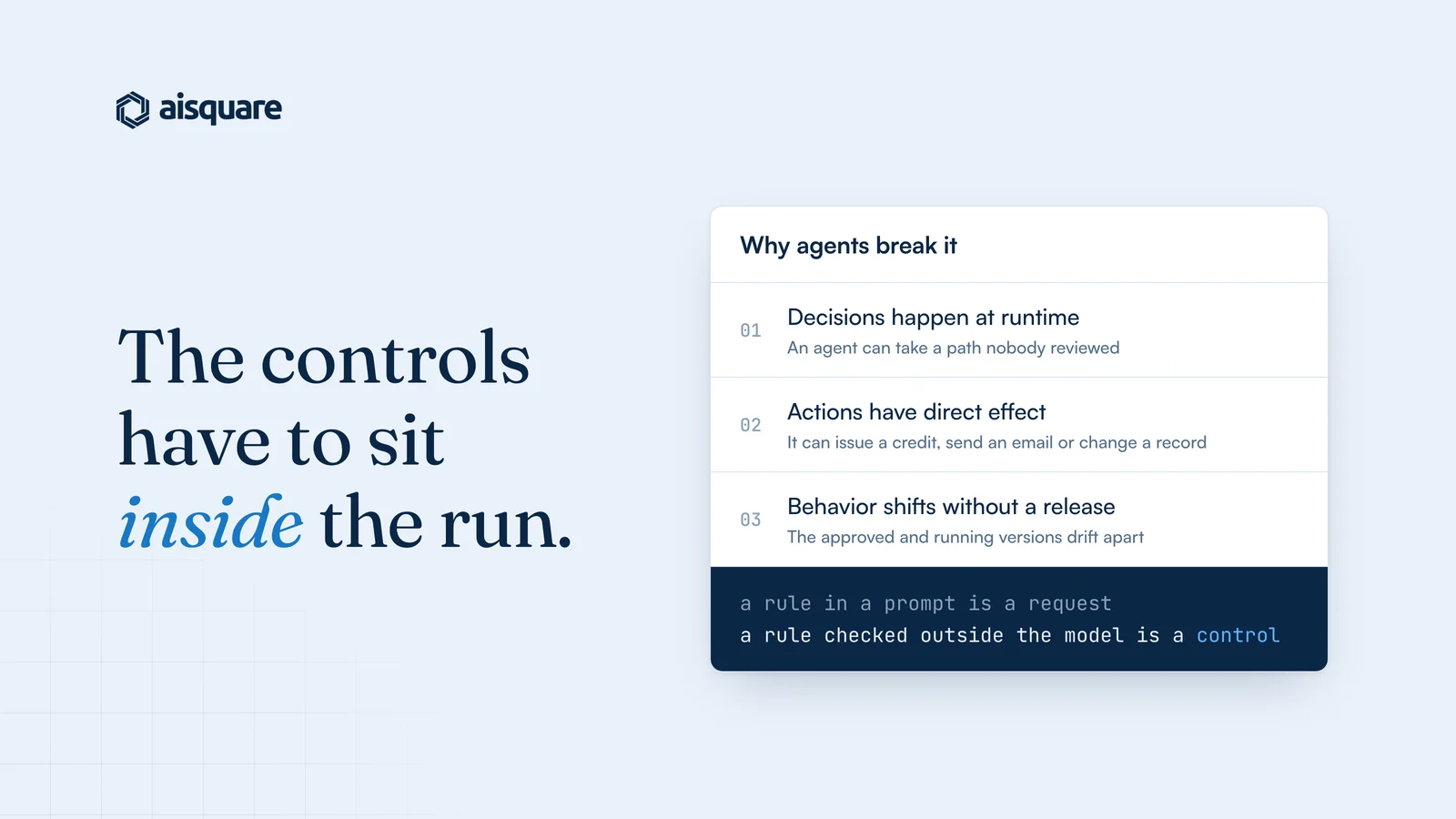
A better model reduces these errors. It does not remove them, because the model still does not know your refund policy or your login rules unless you give it that information and check the answer.
How hallucinations show up in customer-facing agents
The same two causes produce three patterns we see in production agents.
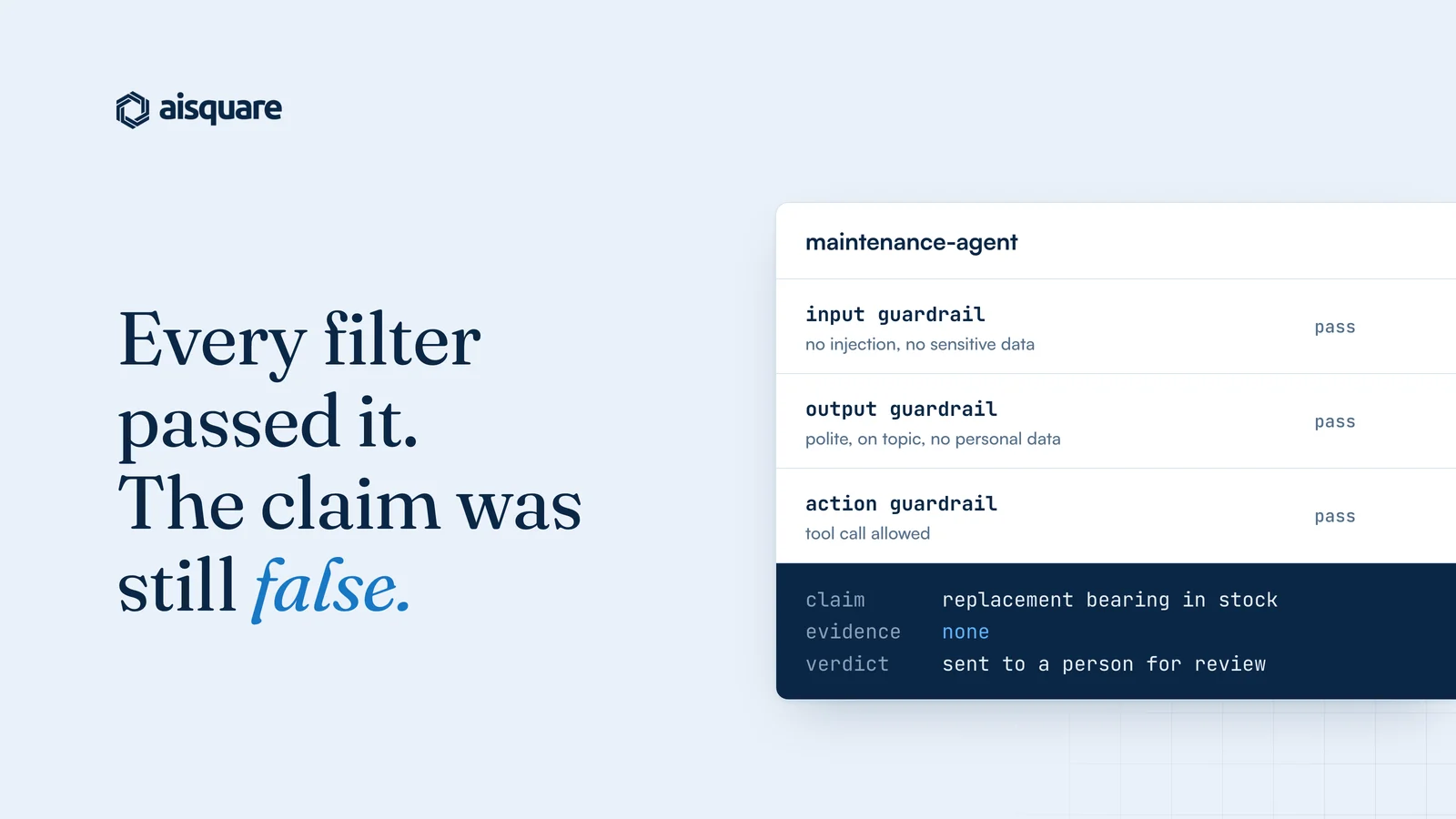
- The invented warranty. The knowledge search returns nothing, and the agent tells the customer that liquid damage is covered for two years.
- The six-month giveaway. A customer threatens to cancel, and the agent offers six months free when policy allows one.
- The approved dispute. The agent tells a fraud victim the refund is approved. Only the fraud team can approve it, and the card was never frozen.
We walked through all three in our webinar, The Trust Blueprint in Action. Watch the recording.
How to prevent AI hallucinations
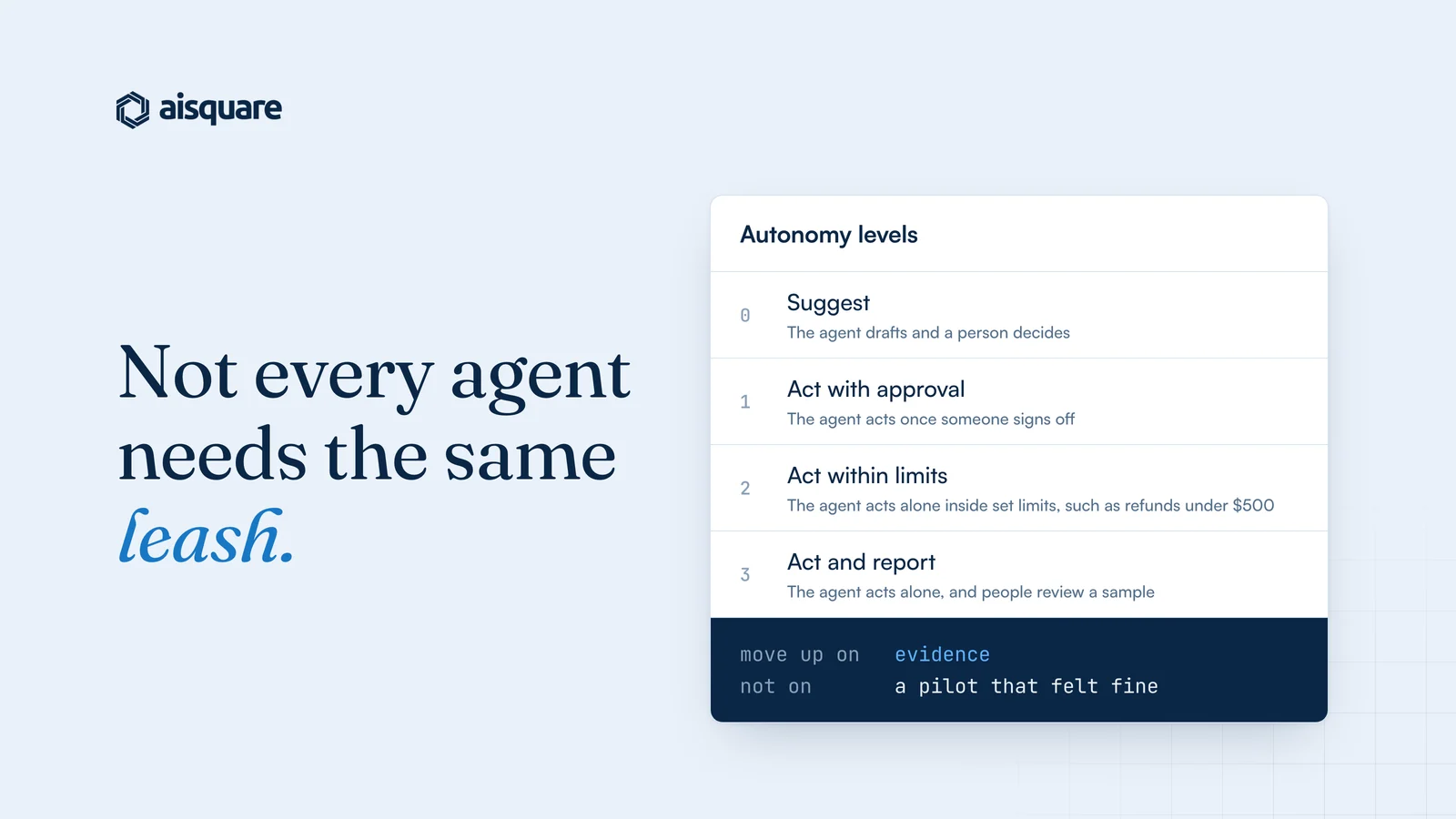
- Ground answers in your documents. The agent answers only from your approved policies and product information.
- Make “I don’t know” a valid answer. When the search comes back empty, the agent says so and hands off to a person.
- Inject context before the answer. Put the relevant policy in front of the agent at the moment it is needed.
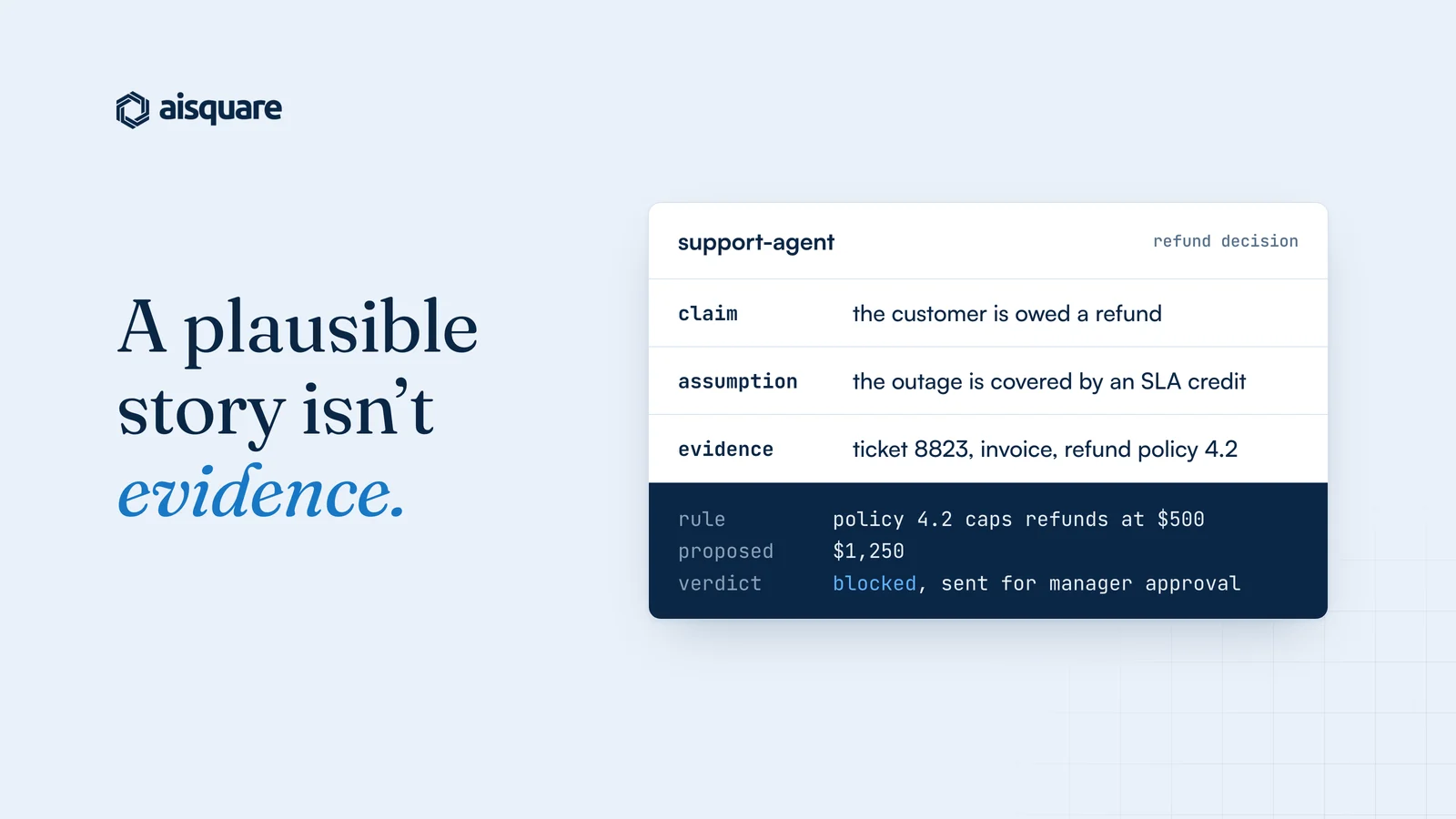
- Enforce limits outside the prompt. Check refund caps and approval rights with a policy engine on every turn. See AI agent guardrails.
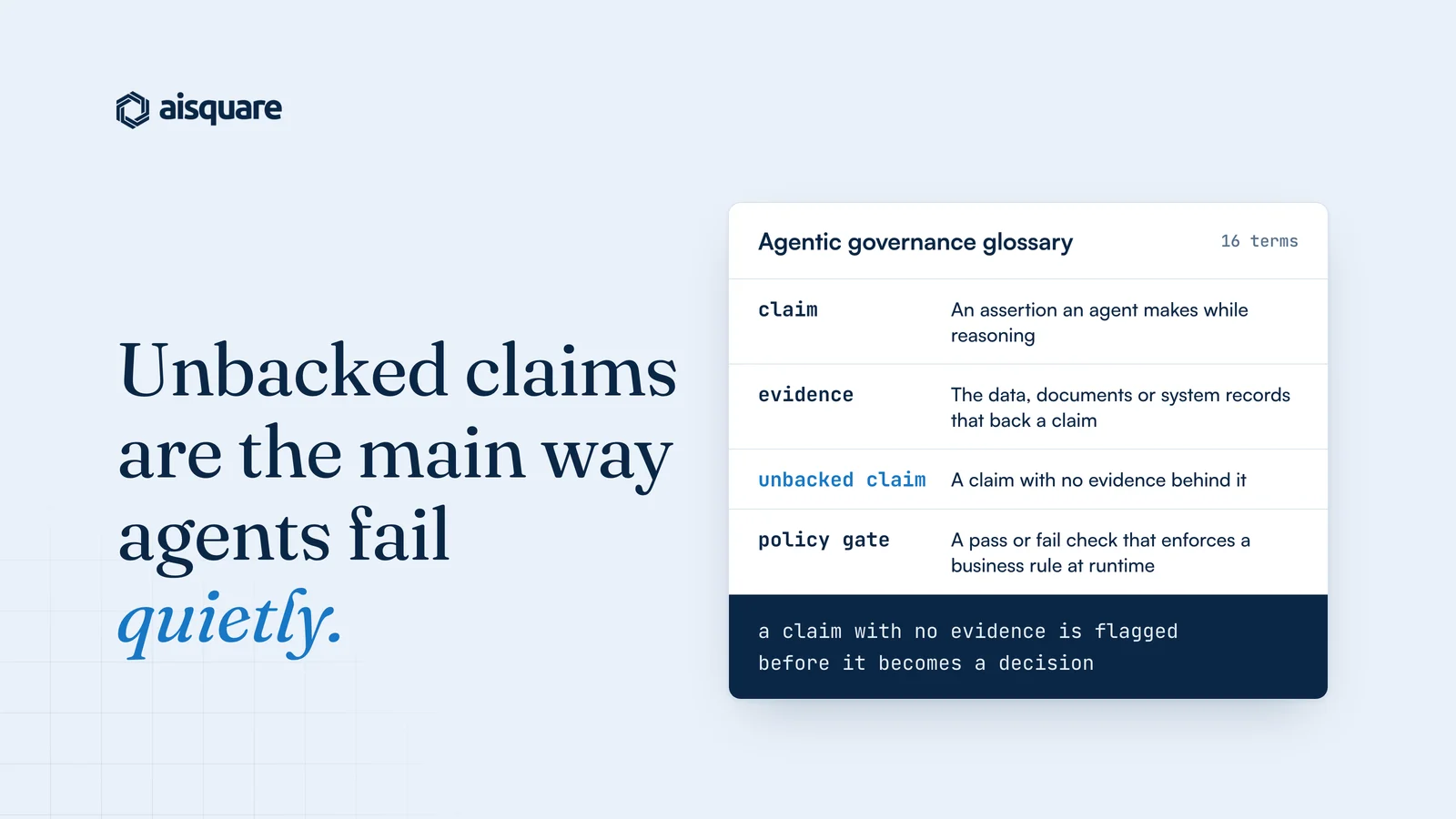
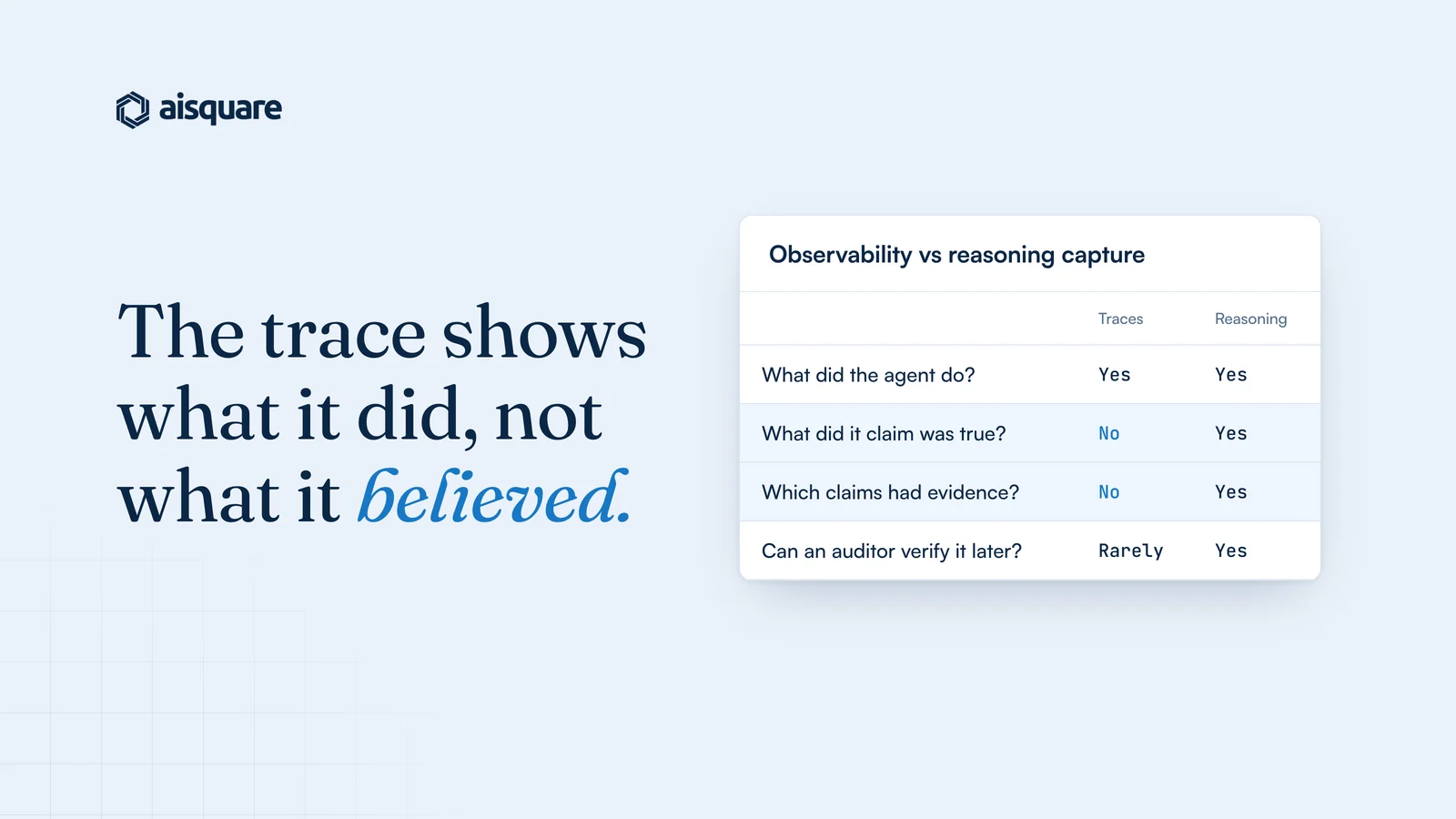
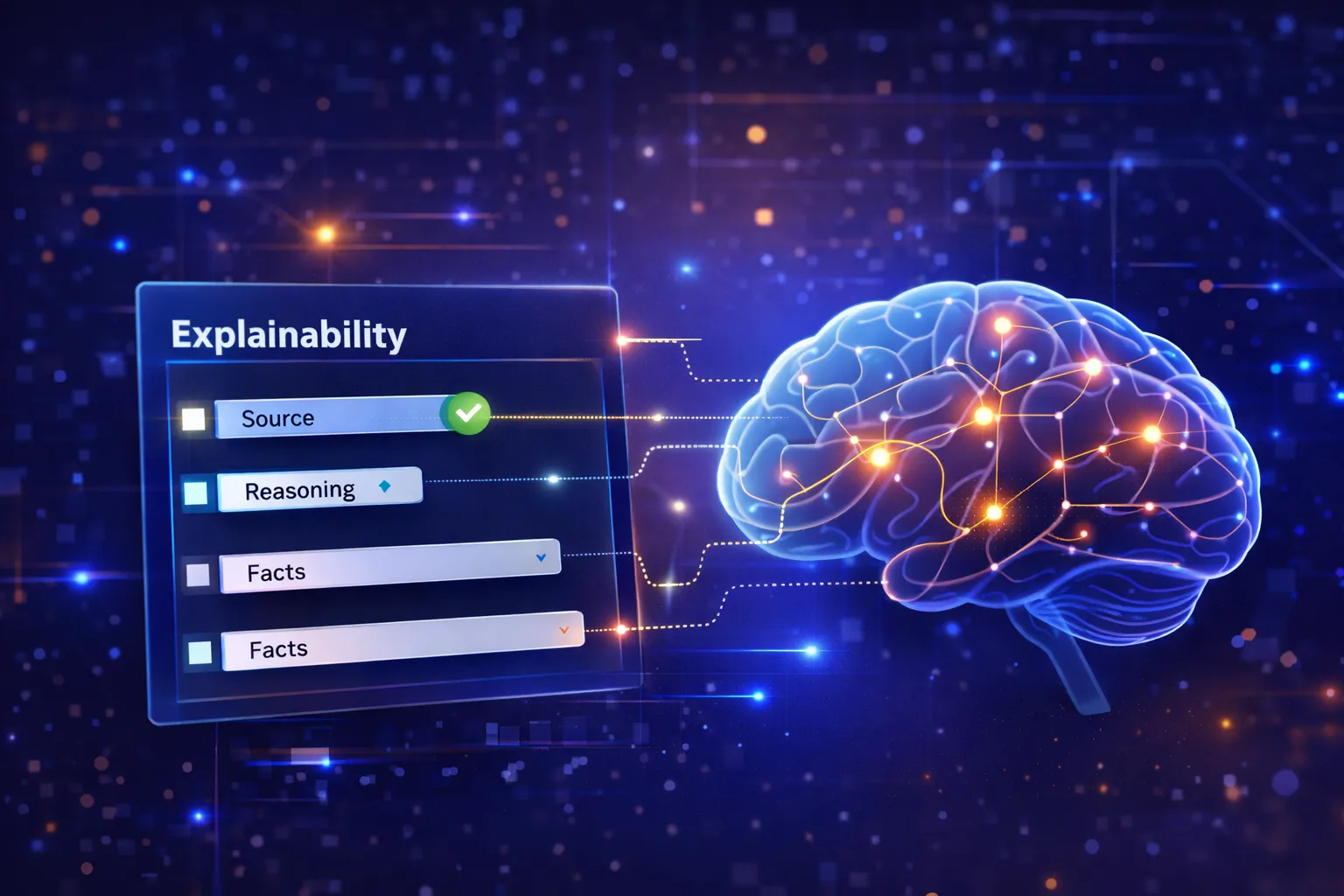
- Show reviewers the sources. Lay out each claim with its evidence so an unsupported claim stands out. See agent observability.
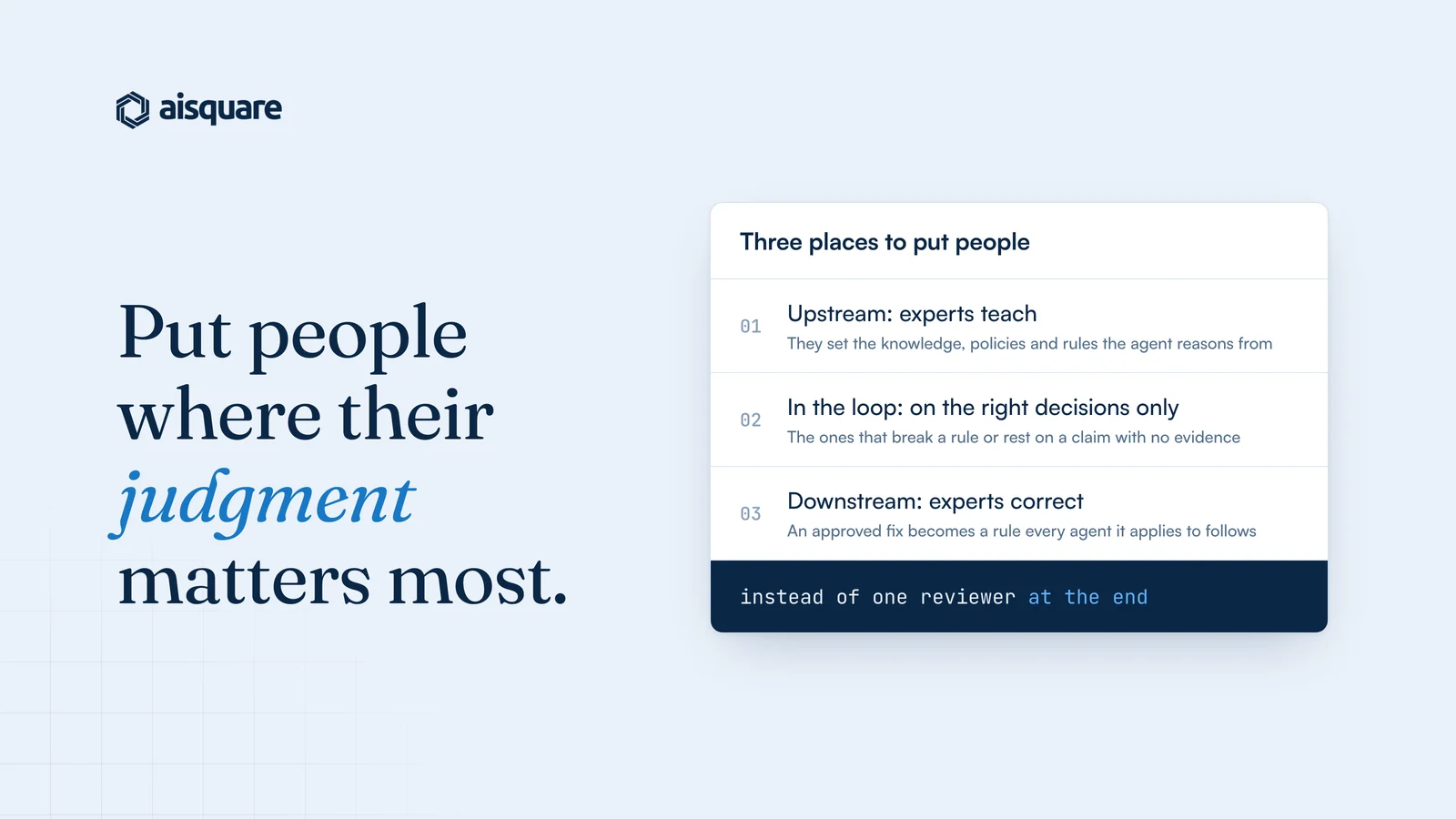
- Turn every correction into a rule. A fix made once should apply to every future run.
What to measure
Track the hallucination rate as the share of answers that state a fact with no supporting source in your approved documents. Track it next to task success and policy accuracy.
In our bank card support demo, adding rules from the first round of failures cut the hallucination rate and raised task success.
Where AISquare fits
AISquare captures the reasoning behind each agent step and flags claims with no evidence behind them. It injects the right context before the agent answers and checks every action against your rules in real time. See the full approach in our AI agent governance guide.
FAQ
What is an example of an AI hallucination?
Air Canada’s chatbot telling a customer they could claim a bereavement discount after travel, when no such policy existed, is a well-known example.
Why do AI models hallucinate?
They generate the most likely next words. When they lack the right information, the most likely words can still form a confident, false answer.
Can AI hallucinations be eliminated?
Not fully. They can be reduced sharply and caught before they reach a customer with grounding, runtime rule checks and source-level review.
Next step
Bring one agent and we will show you where it answers without a source. Book a demo.
Related reading: AI agent governance · AI agent guardrails · Agent observability · AI audit trail · AI governance tools · AI BOM · AI governance framework · Human in the loop
Get your agents into production
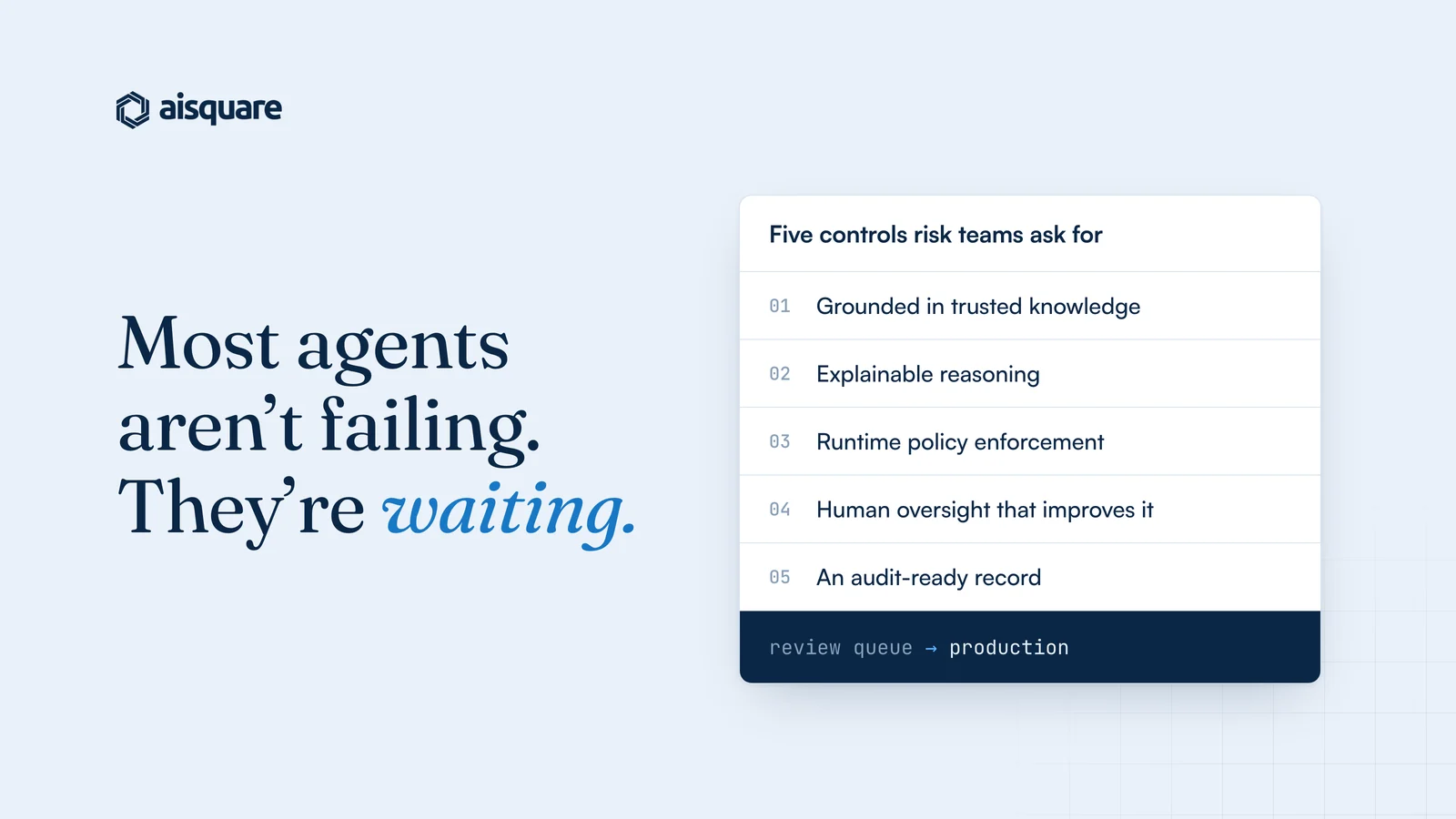
AISquare captures the reasoning behind every agent decision, enforces your rules on every run, and keeps a record your risk team can check.