AI Governance Framework for AI Agents: A Practical Guide
What is an AI governance framework, and what changes when AI agents act on their own? Six parts, the standards behind them, and a 30-day starting plan.

Contents · 12 sections
- What is AI governance?
- What a traditional framework covers
- Why agents break it
- The six parts of an AI governance framework for agents
- How the main standards map to these parts
- A 30-day starting plan
- Where AISquare fits
- FAQ
- What is an AI governance framework?
- Which AI governance framework should I use?
- How is governing AI agents different from governing models?
- Next step
An AI governance framework is the set of rules, roles and controls a company uses to make sure its AI is safe, lawful and accountable. Most frameworks were written for models that answer questions. AI agents take actions, so the framework needs controls that work while the agent is running.
What is AI governance?
AI governance is how an organization decides what its AI is allowed to do, checks that it stays inside those limits, and proves it afterward. It covers three questions:
- Who is accountable for each AI system?
- What rules apply to it?
- What evidence shows the rules were followed?
A framework turns those questions into a repeatable process, so each new AI project does not start from zero.
What a traditional framework covers
Most AI governance frameworks share the same building blocks:
- An inventory of AI systems and their owners
- A risk rating for each system
- Policies on data, fairness, privacy and security
- Review and approval before launch
- Periodic monitoring and reporting
This works for a credit scoring model that is trained, validated, deployed and reviewed once a quarter. The model does one thing, and it changes only when someone retrains it.
Why agents break it
An AI agent plans its own steps, calls tools, and acts on the result. That changes three things.
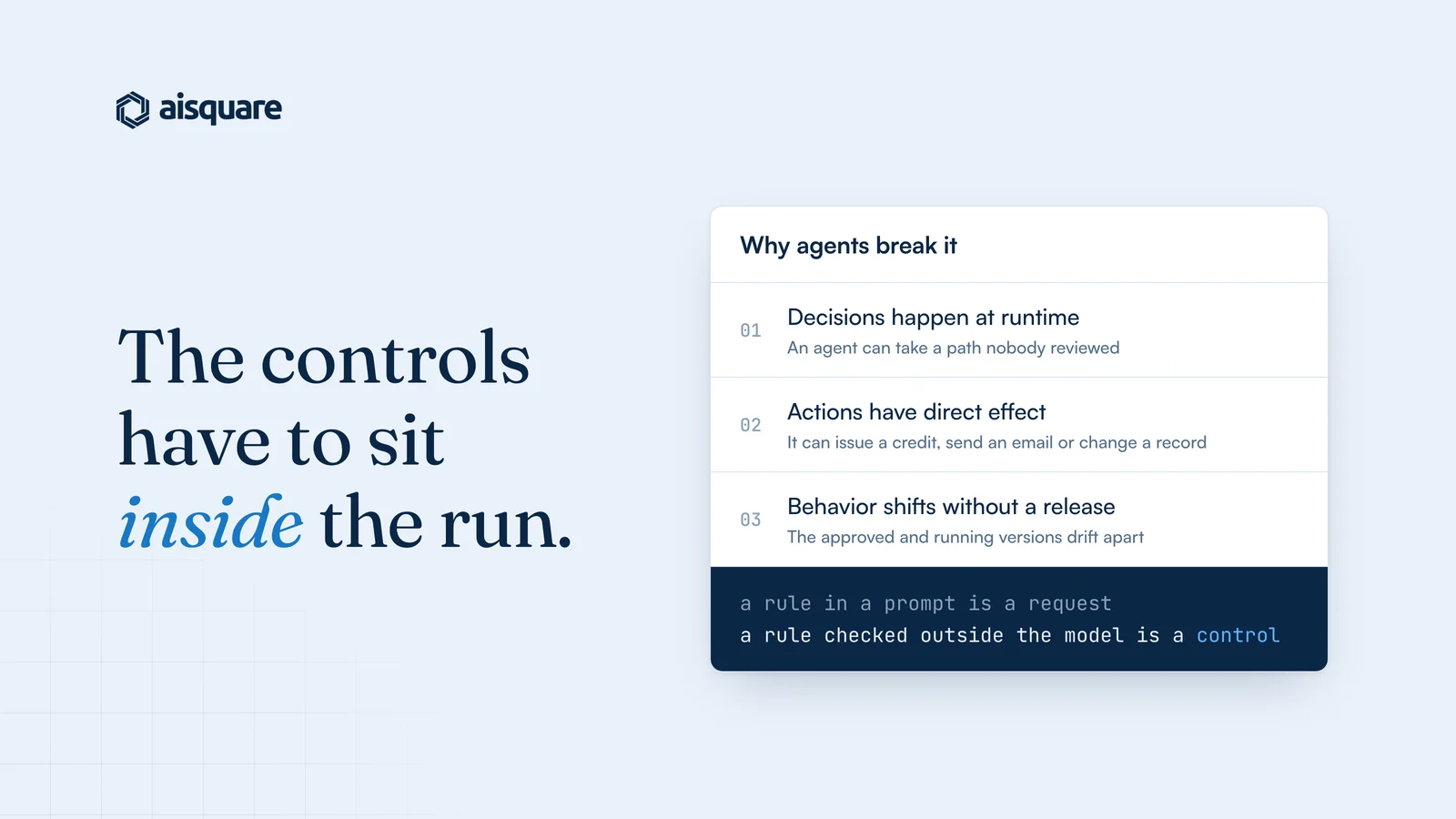
- Decisions happen at runtime. An agent can take a path nobody reviewed, because it chose that path during the conversation.
- Actions have direct effect. An agent can issue a credit, send an email or change a record. A quarterly review finds the problem months after the customer did.
- Behavior shifts without a release. A prompt edit, a new tool or a model update changes what the agent does. The approved version and the running version drift apart.
A policy document cannot keep up with that. The controls have to sit inside the run.
The six parts of an AI governance framework for agents
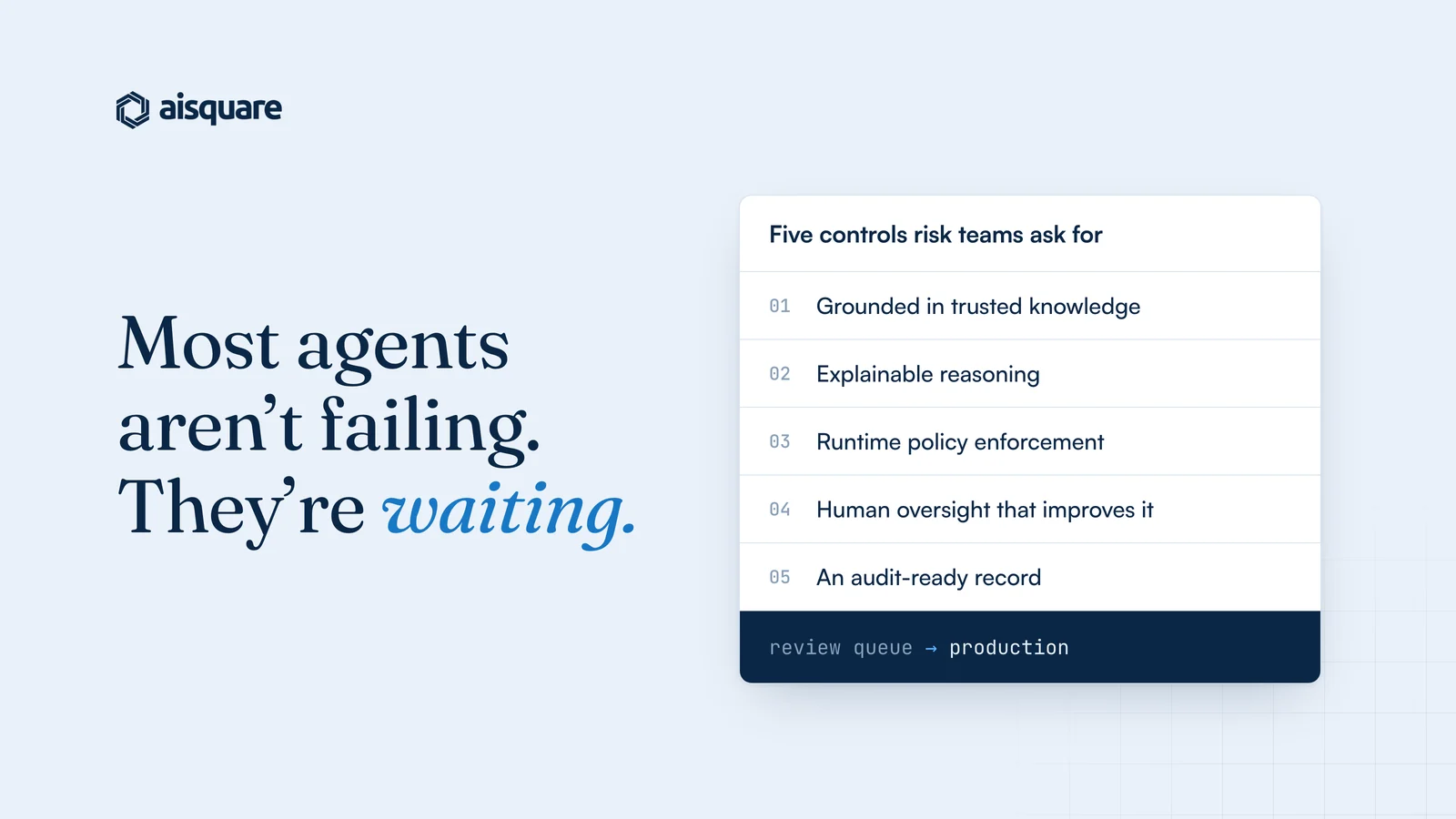
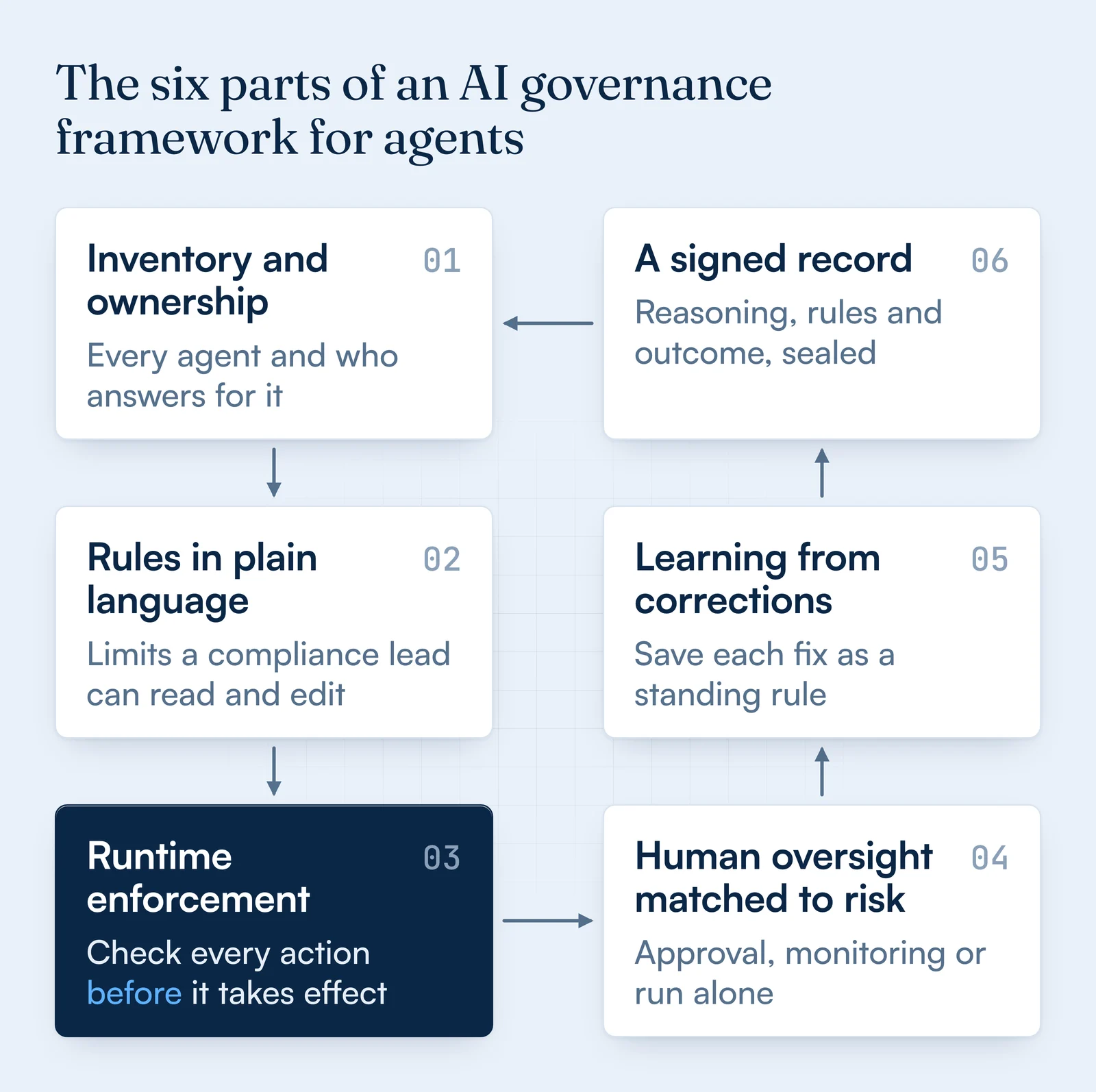
- Inventory and ownership. List every agent, what it can access, which tools it can call, and the person who answers for it. Accountability stays with a human and never transfers to the agent.
- Rules in plain language. Write the limits as rules a compliance lead can read and edit: refund caps, approval rights, topics the agent must hand off.
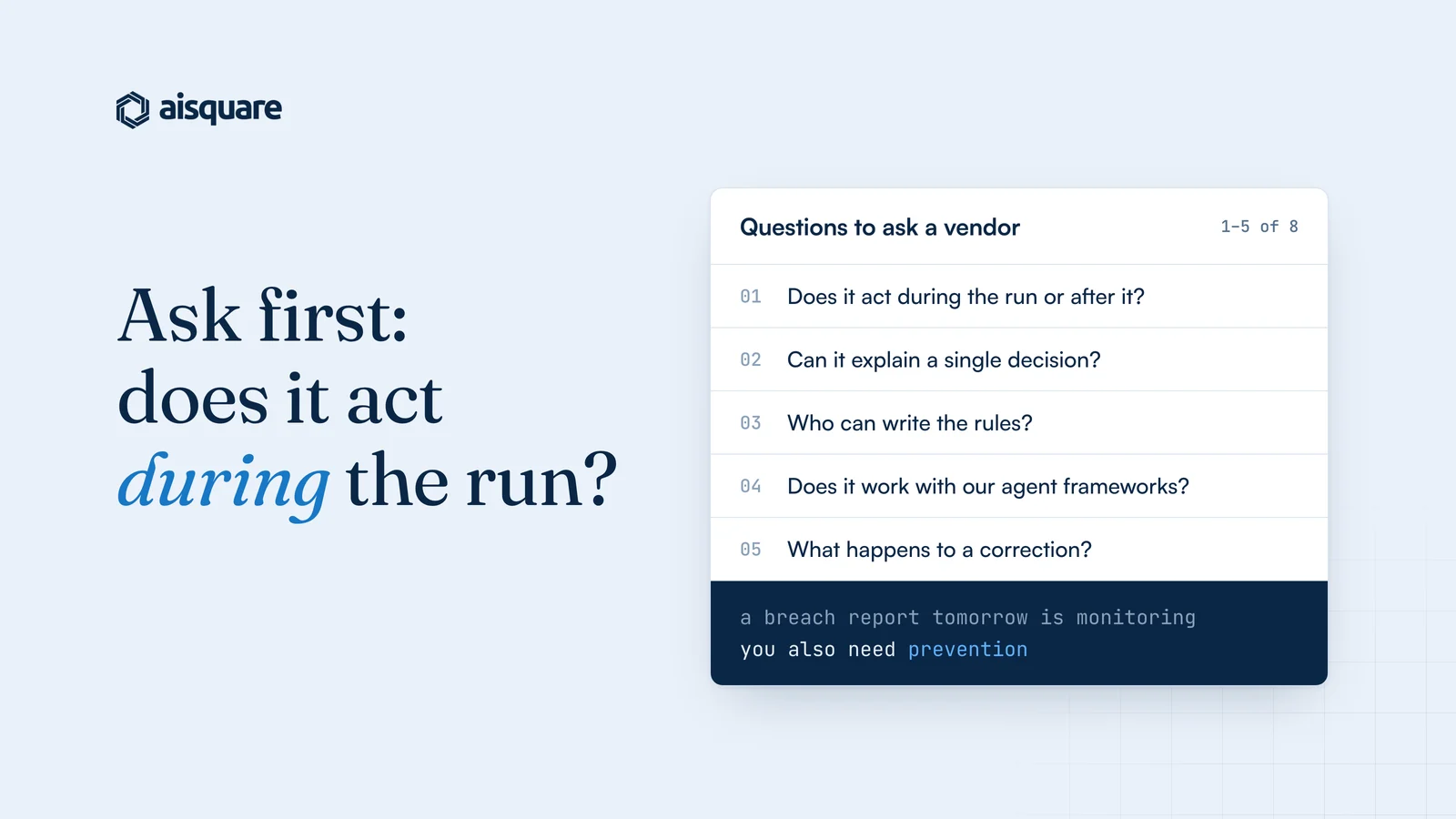
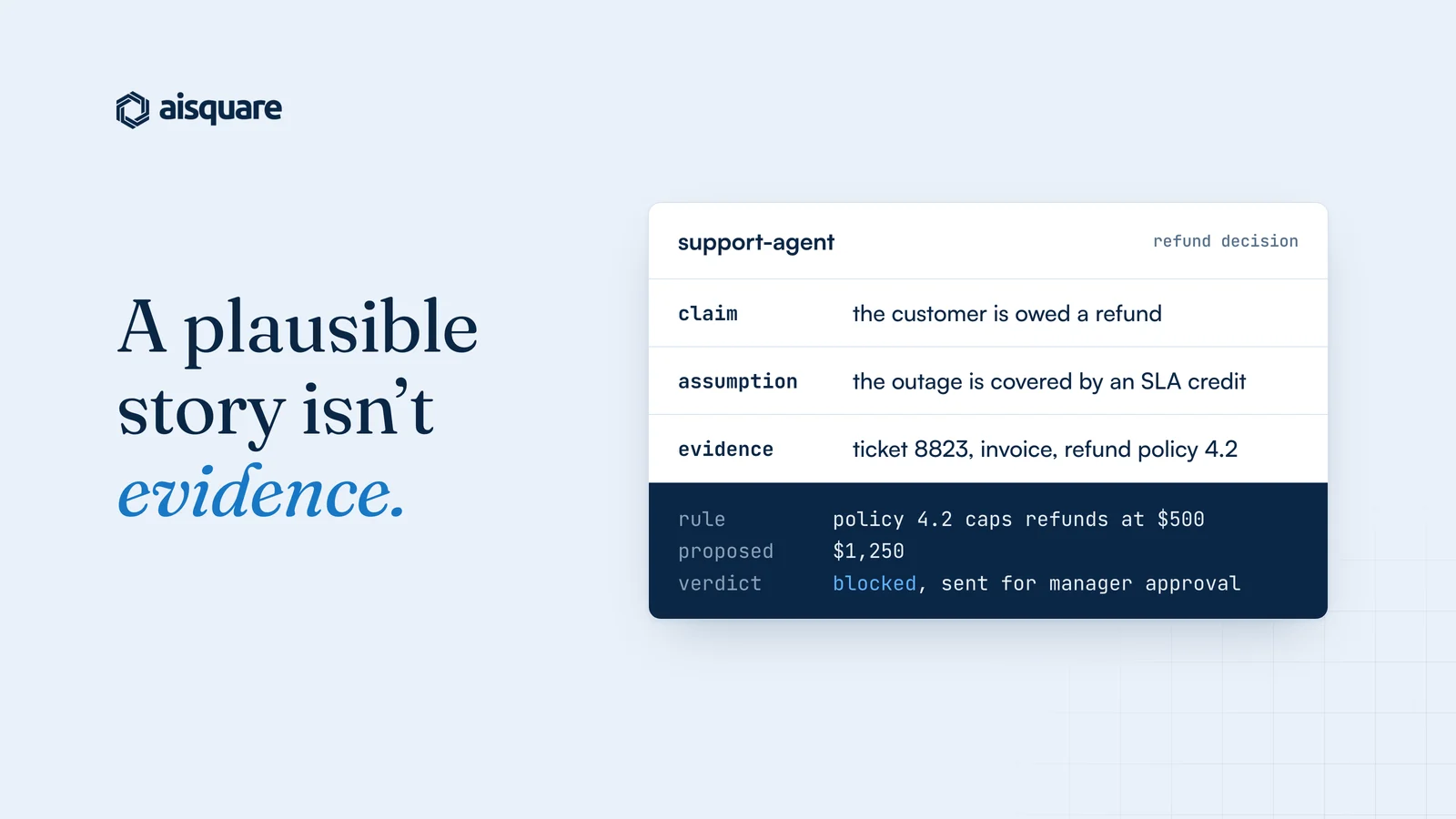
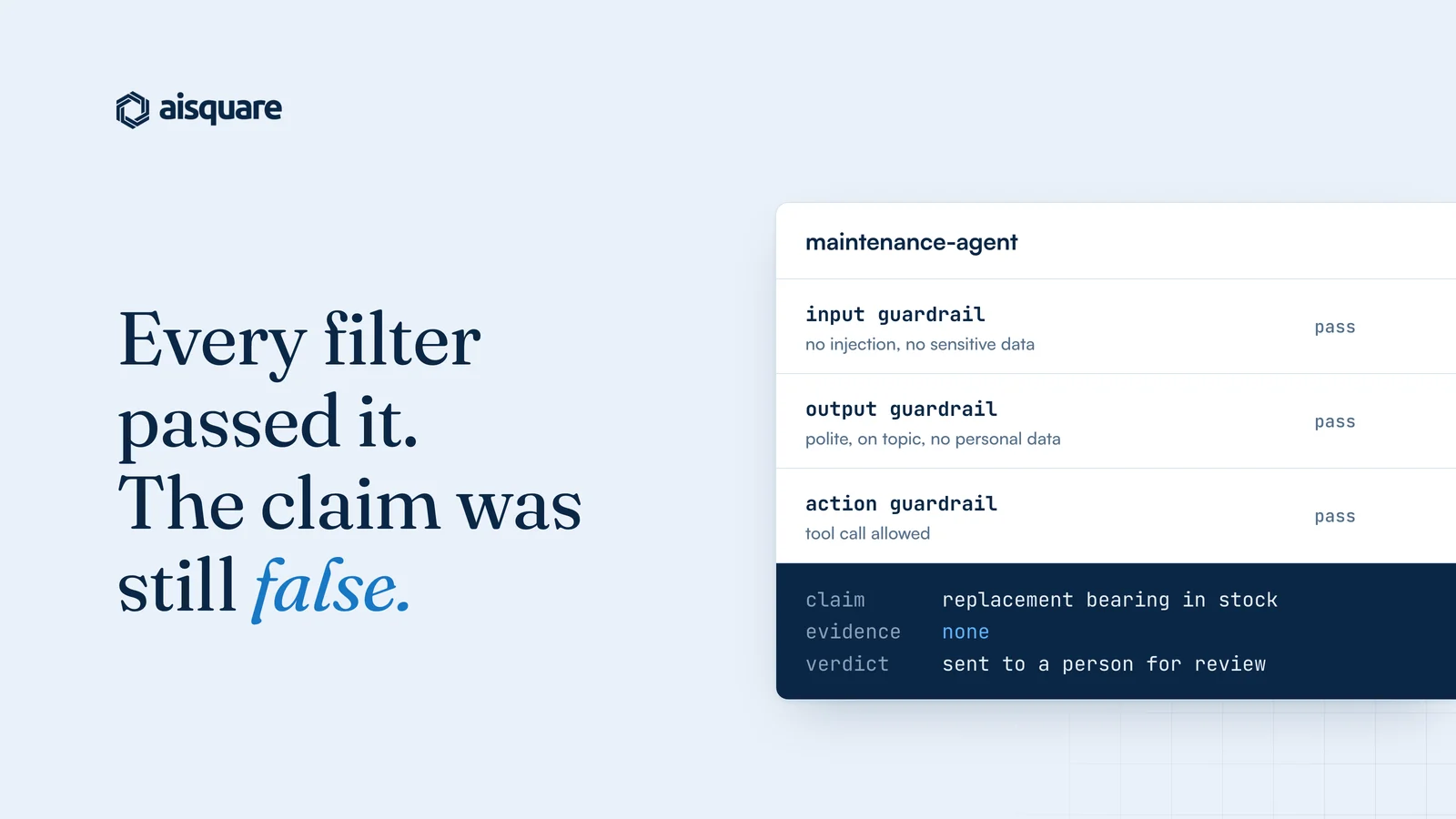
- Runtime enforcement. Check every action against those rules before it takes effect. A rule in a prompt is a request. A rule checked outside the model is a control. See our guide to AI agent guardrails.
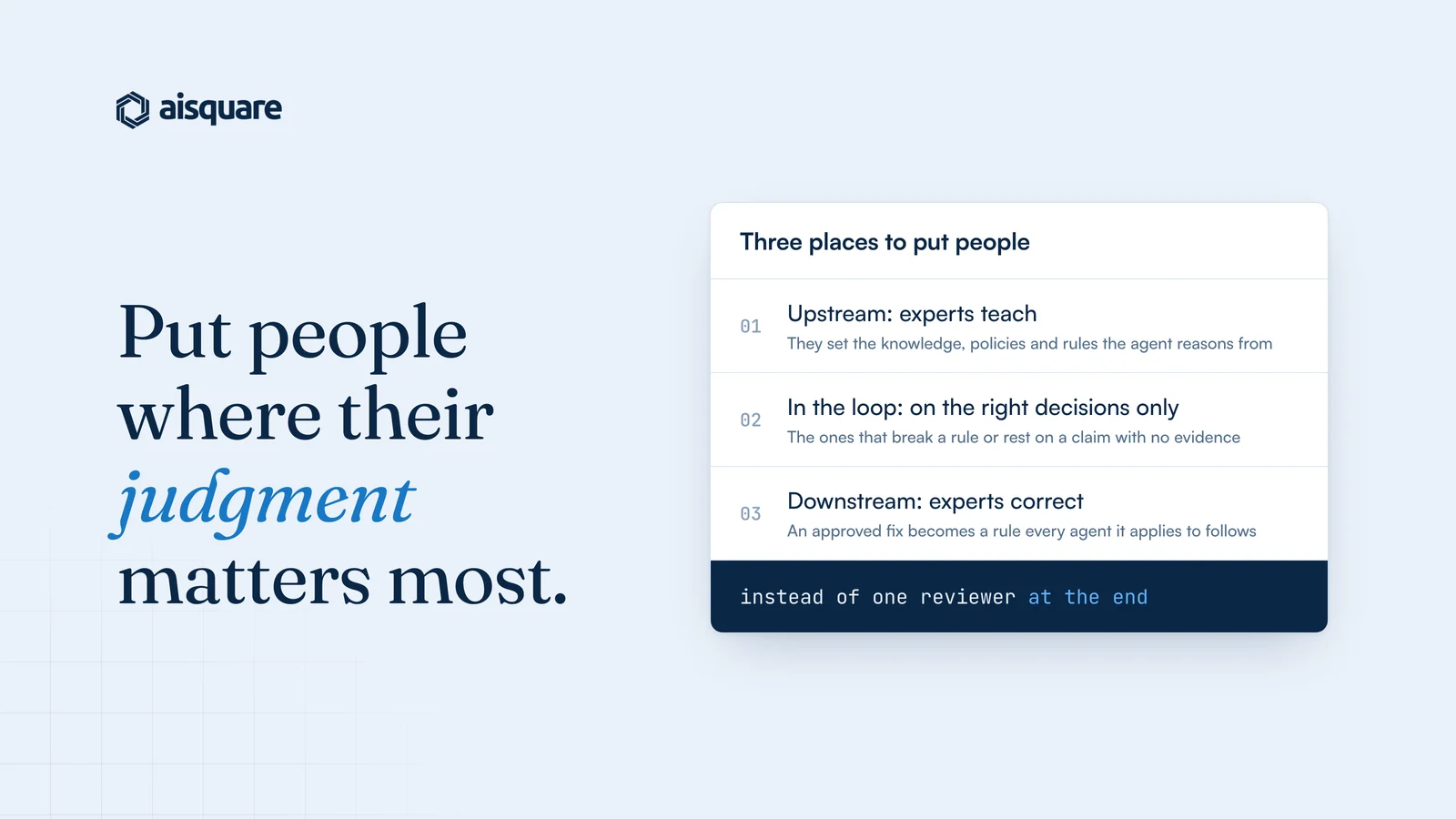
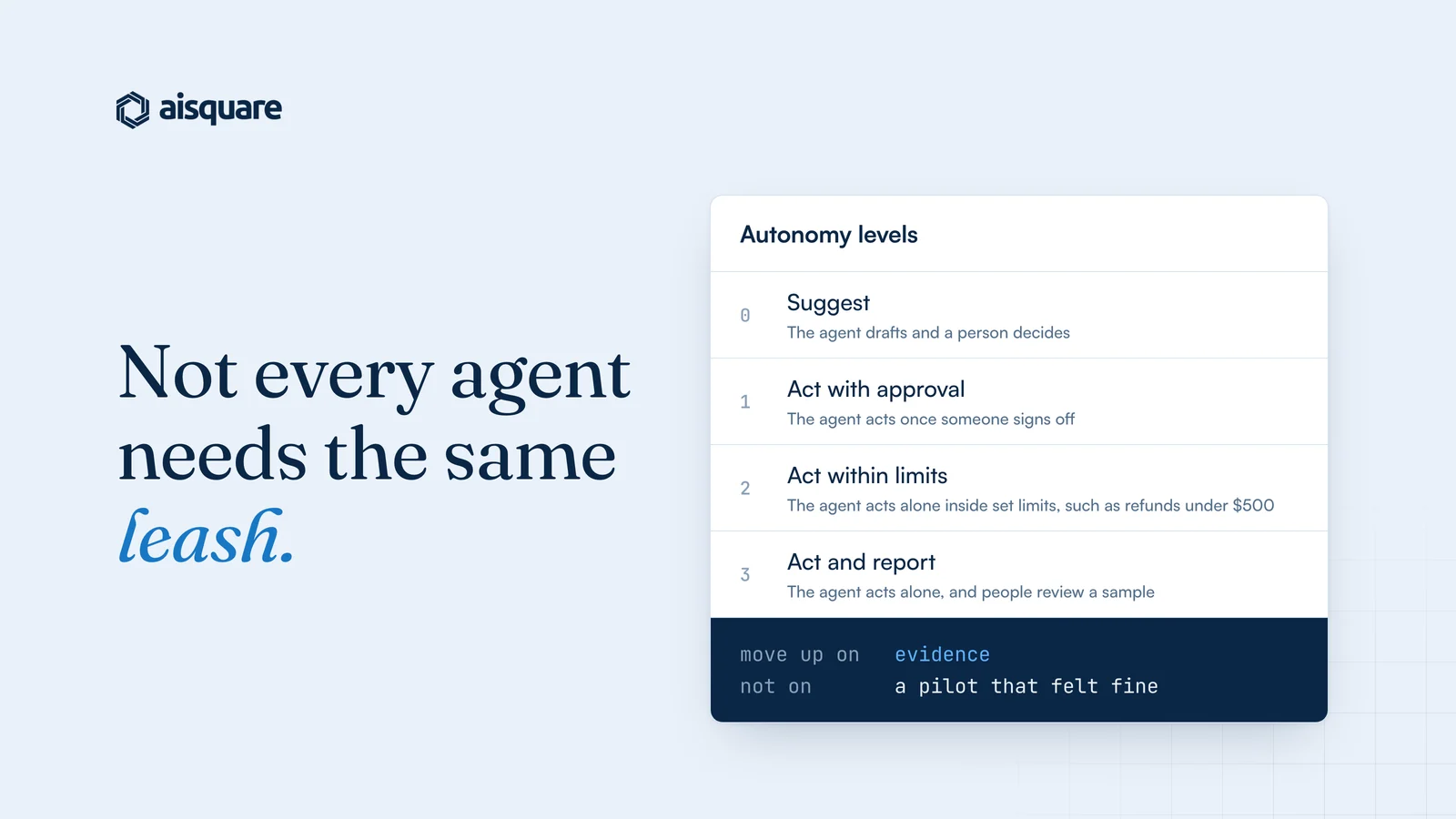
- Human oversight matched to risk. Decide which actions need approval, which need monitoring, and which can run alone. See human in the loop.
- Learning from corrections. When a reviewer fixes a decision, save the fix as a standing rule so every agent follows it next time.
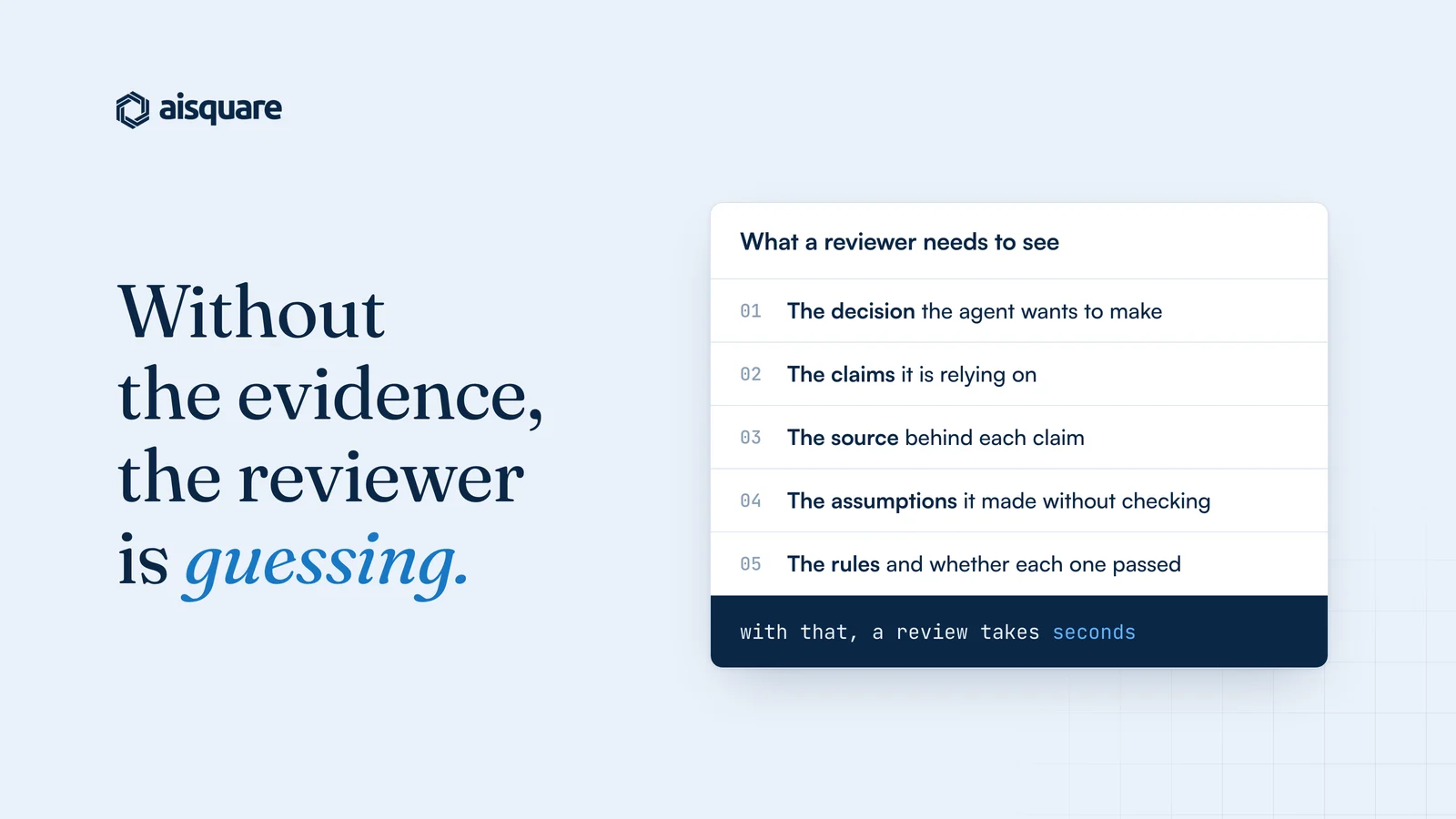
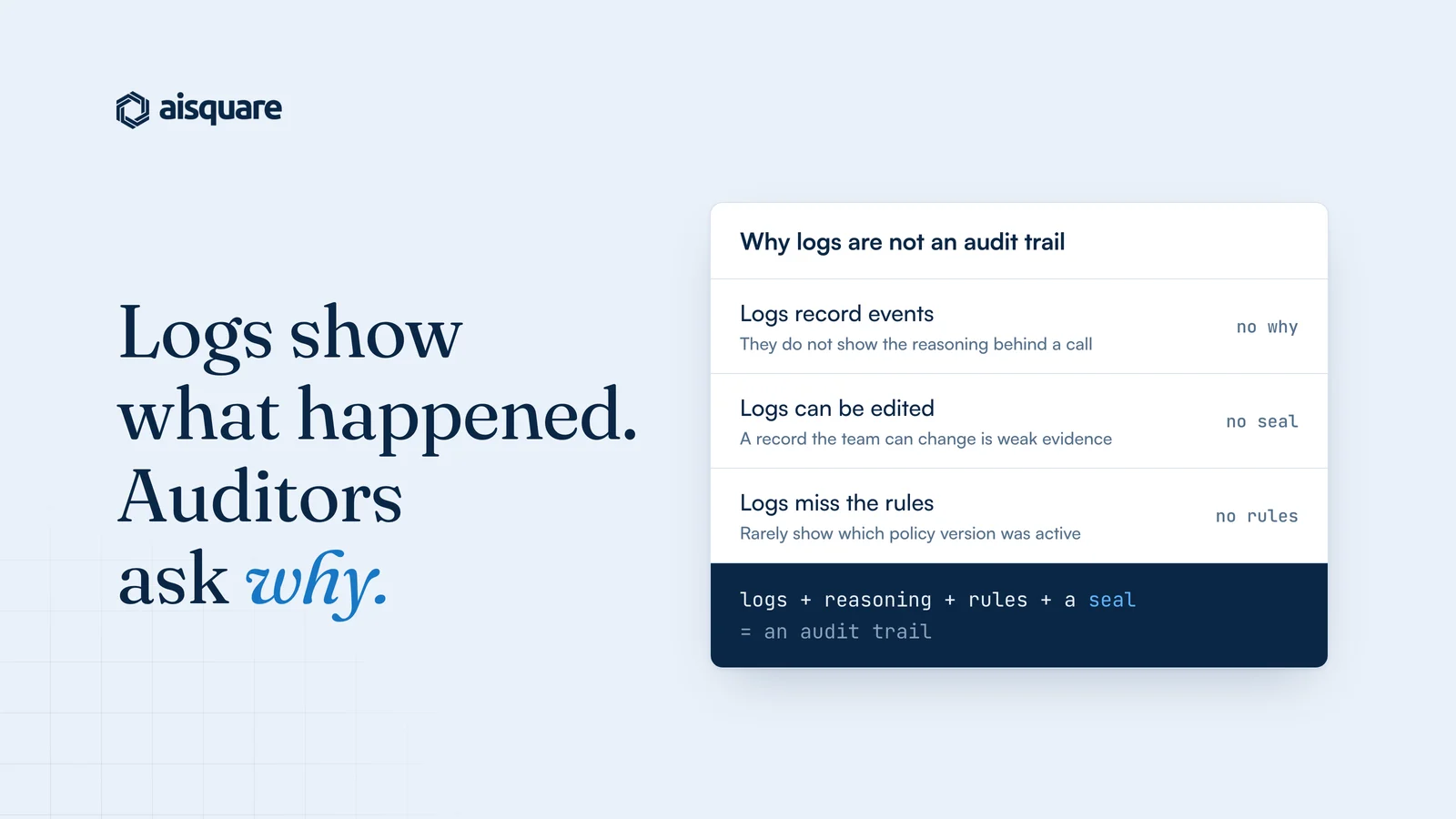
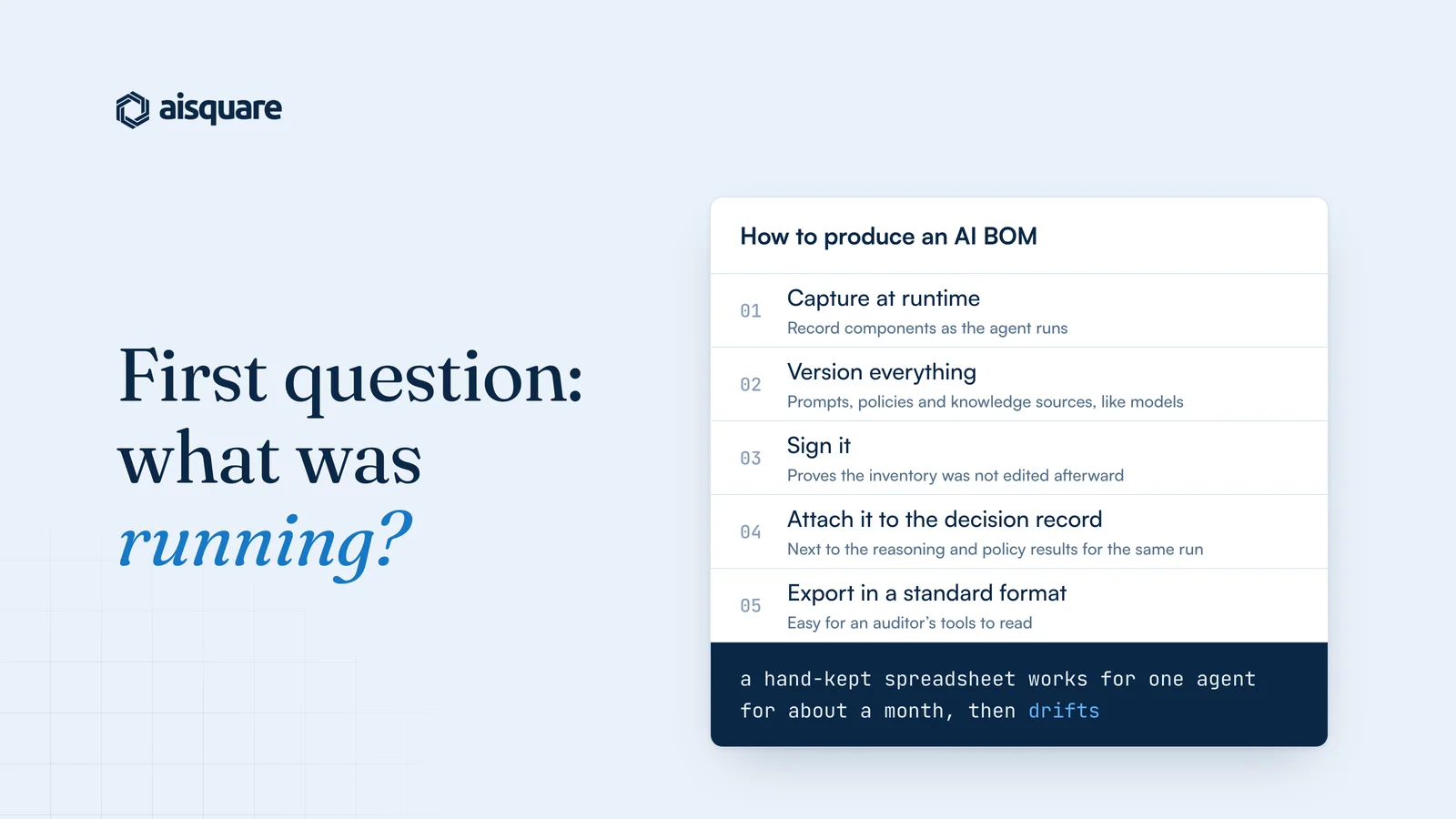
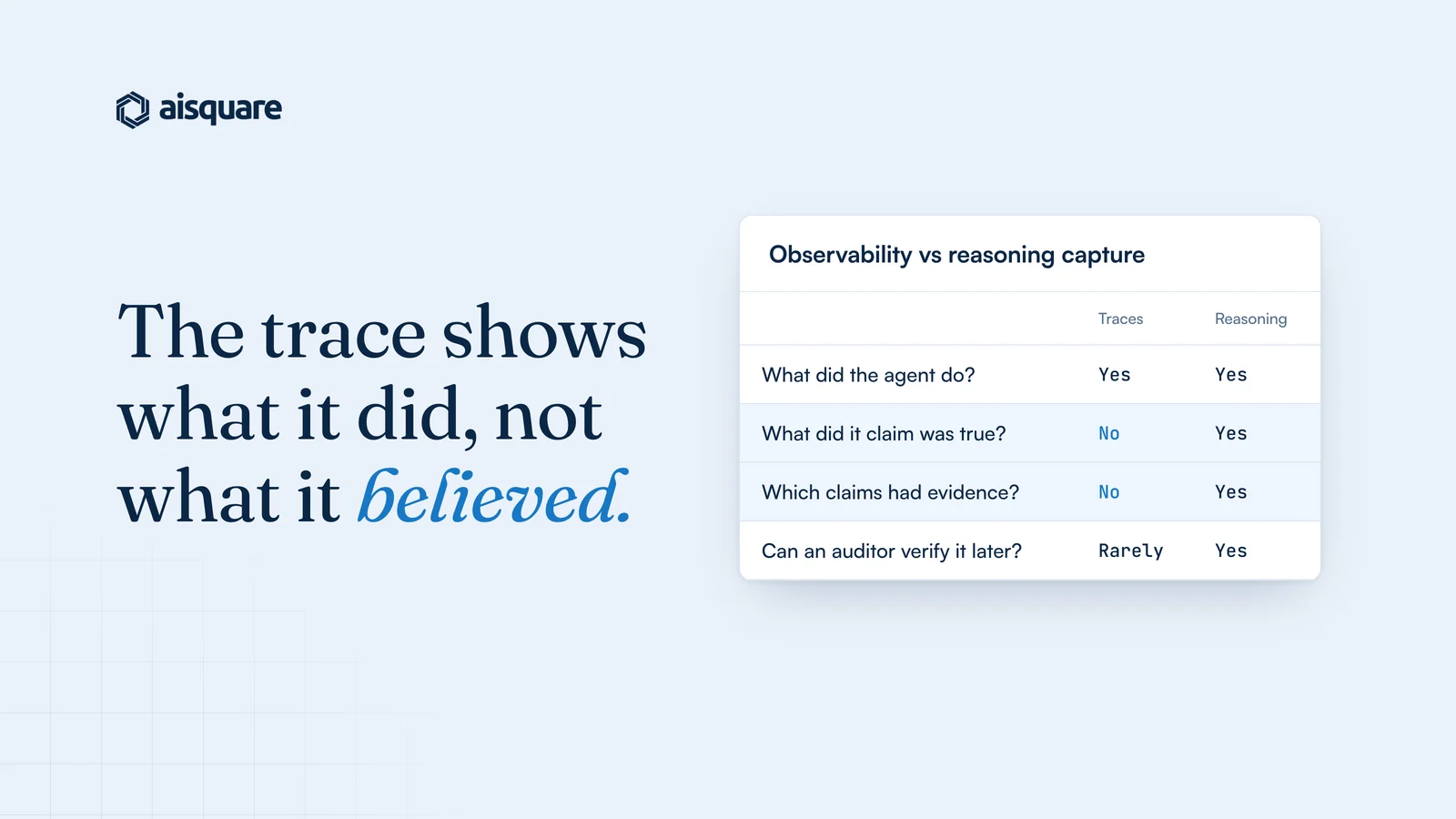
- A signed record. Keep the reasoning, the rules applied and the outcome for each run, sealed so it can be verified later. See AI audit trail.
How the main standards map to these parts
You do not need to invent a framework. Start from a published one and add the agent controls.
| Standard | What it gives you | Where agents need more |
|---|---|---|
| NIST AI RMF | Four functions: Govern, Map, Measure, Manage | Runtime checks on individual actions |
| ISO/IEC 42001 | A management system for AI, with roles and reviews | Evidence at the level of a single decision |
| EU AI Act | Duties for high-risk systems, including record keeping and human oversight | Records detailed enough to explain one agent run |
| SR 26-2 (replaced SR 11-7) | Model risk management for banks | It leaves out generative and agentic AI, so agents need more |
Check with your counsel on which apply to you.
A 30-day starting plan
Week 1: inventory. List the agents in pilot and production, their owners, their tools and their data access.
Week 2: pick one agent and write its rules. Choose the agent closest to customers. Write its ten most important limits in plain language.
Week 3: turn on enforcement and records. Check those rules at runtime and start keeping a decision record for every run.
Week 4: review the failures. Group what went wrong, add the missing rules, and set the approval levels for each action type.
After 30 days you have one governed agent and a pattern you can repeat.
Where AISquare fits
AISquare is a governance layer for the agents you already run. It records the reasoning behind each decision, checks every decision inside the run, turns each approved correction into a rule for one agent or the whole fleet, and seals a signed record of each run. It connects to common agent frameworks without a rewrite. Read more in our AI agent governance guide.
FAQ
What is an AI governance framework?
It is a structured set of roles, policies and controls that keeps AI systems safe, lawful and accountable across their life.
Which AI governance framework should I use?
Many companies start with the NIST AI RMF or ISO/IEC 42001 and add sector rules on top. For agents, add runtime enforcement and per-decision records.
How is governing AI agents different from governing models?
Models are reviewed before release. Agents make new decisions on every run, so the checks have to happen during the run as well.
Next step
See what a governed agent looks like on one of your own use cases. Book a demo.
Related reading: AI agent governance · AI agent guardrails · Agent observability · AI governance tools · AI hallucination examples · AI BOM · Agentic governance framework · Human in the loop · AI audit trail
Get your agents into production
AISquare captures the reasoning behind every agent decision, enforces your rules on every run, and keeps a record your risk team can check.