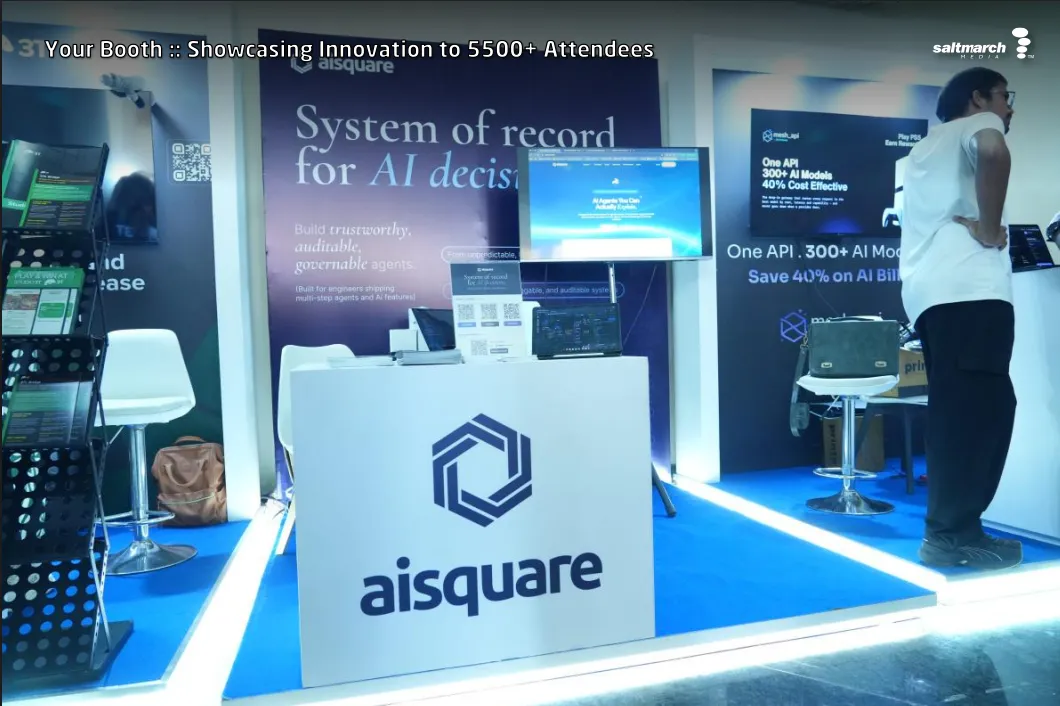
GIDS Summit 2026 – What Attendees Really Cared About
GIDS Summit 2026 was electric around two core themes: explainability in AI and open source governance. Here is what the event looked like from the audience perspective.
GIDS Summit 2026 – What Attendees Really Cared About
The summit was electric around two core themes: explainability in AI and open source governance. Technical leaders, architects, and practitioners from across enterprise software came specifically to dig into practical, real-world problems—not just vendor pitches.
The Buzz and What Drew People In
AISquare's Explainability Layer resonated instantly, especially with banking and regulated industry teams. Open source repos got genuine traction—developers weren't just "kicking the tires," but actively forking, starring, and planning to contribute.
There was a genuine hunger for transparency and auditability in AI systems across enterprise teams. The conversations made it clear that this is no longer a nice-to-have—it is table-stakes.
The Hard Questions Teams Asked
Despite the excitement, attendees came with specific challenges and pushback.
Integration Headaches:
Teams wanted to know how AISquare fits into their existing stack. "Do you support Go? .NET? Python? What about our data warehouse connectors?" SDK language gaps were a real pain point—enterprise teams don't stick to one language, and they need broad coverage to adopt confidently.
Observability and Monitoring Gaps:
Enterprises want clean, real-time visibility into what AI systems are doing. Fast troubleshooting when things go wrong. Auditing, tracing, and live dashboards—not just logs. The ask was clear: if you want enterprise adoption, observability has to be first-class.
Governance and Compliance Demands:
Banks and big corporates need airtight audit trails. The ability to prove who made what decision and why at any moment. Risk teams want line-by-line transparency and configurable permissions. This came up in nearly every serious enterprise conversation.
Competitive Landscape from the Floor
Attendees were comparing tools and platforms openly:
- Opik: Seen as strong on explainability, but integration story is hit-or-miss.
- Orkes: Good at workflow orchestration, but weaker on governance and compliance.
- AISquare: Positioned as the bridge—open source credibility combined with enterprise muscle and practical governance.
The real differentiator attendees saw was developer-friendliness. SDKs for any stack, API docs that actually make sense, and deployment playbooks that work in the real world. As one attendee put it: "If you win over the developers first, the product gets championed internally."
What Attendees Wanted to See Next
From both the product and community side, the asks were clear.
For Product Teams:
Live demos showing integration in action, not theoretical talks. Analytics dashboards that prove ROI immediately. Real-world use cases they could learn from and replicate.
For the Developer Community:
Fast iteration on SDKs and connectors. Frictionless onboarding. Keeping docs, code samples, and getting-started guides in sync. More community feedback loops and continuous iteration.
Bottom Line from the Floor
Attendees left feeling that AISquare understood a real pain point—making AI explainable and governable at enterprise scale, with open source roots. But there was also a clear message: execution matters more than vision.
Close the integration gaps, ship the SDKs, smooth out the observability, and you've got something teams actually want to deploy.
The energy was there. The skepticism was healthy. The opportunity was real.